

This post is part of a series on the new questions raised by AI.1 In this post, I look at how AI is likely to empower consumers and reduce firms’ ability to take advantage of customers’ limited information and cognitive capacities.
In 2017, Forbes writer Theo Miller decided to subscribe to the New York Times to avoid its paywall. But after about a month, he decided he did not need another subscription and tried to cancel it.
He had subscribed online, but he discovered that cancelling could not be done in the same way. There was no option to cancel online. Instead, he had to call customer service. He never completed the cancellation. Perhaps the prospect of a lengthy phone call, and of having to explain or defend his decision to cancel to another person, was enough to make him procrastinate. In the end, it was only when his credit card was stolen, and he had to cancel the card, that the payments finally stopped.2
Miller’s case is an example of what has been called a subscription trap: subscription services that are easy to get into, but hard to get out of. Such a design is part of what behavioural economists have labelled sludge: frictions that are often deliberately designed to benefit firms at the expense of customers.3
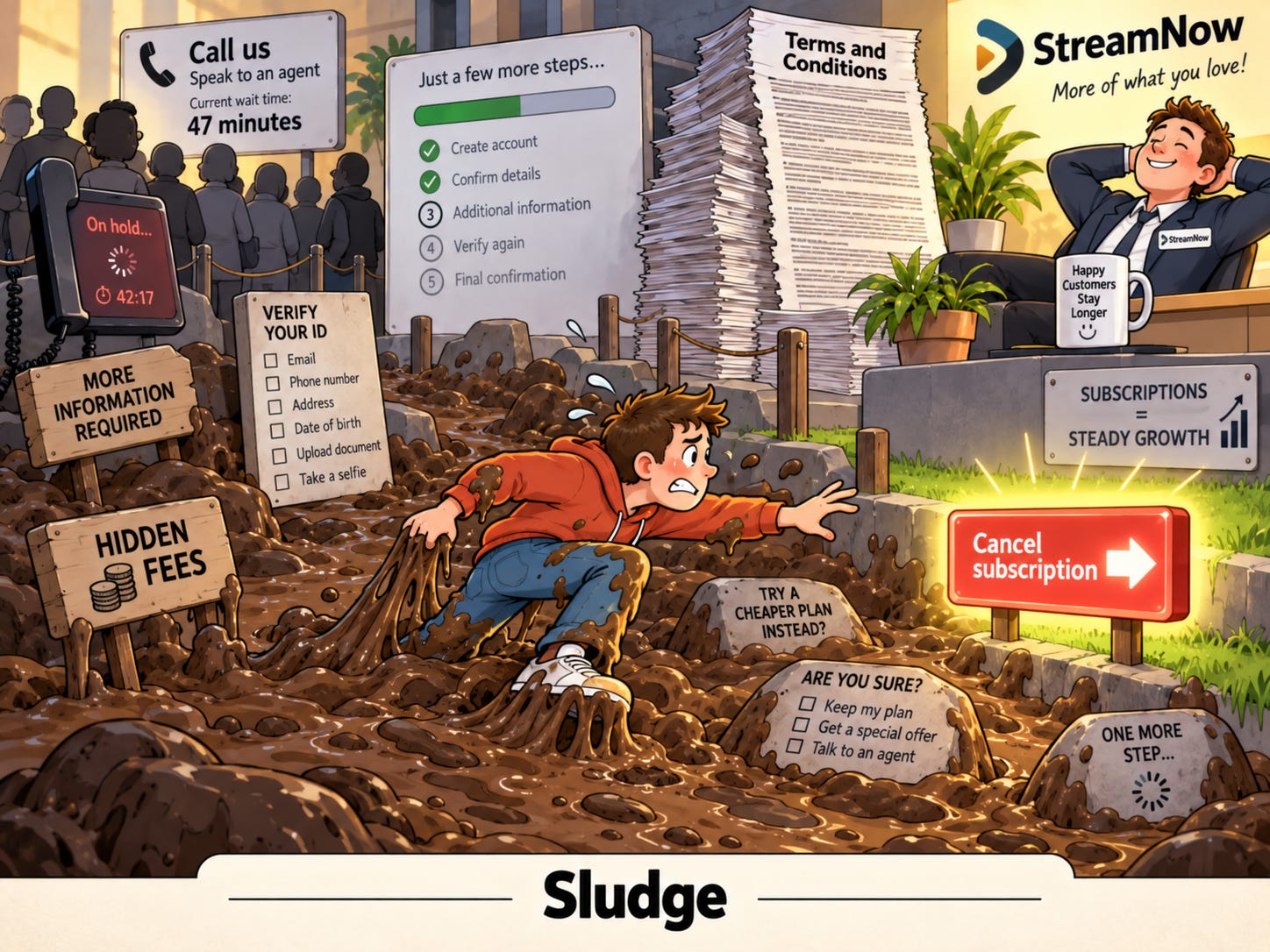
Sludge is one of the many ways consumers are taken advantage of by companies in markets that depart from ideal conditions. Here I look at how AI may improve markets and customers’ well-being by helping consumers search, understand what they buy and defend themselves when things go wrong.
Markets and their limitations
Markets are touted by economists for being great at allocating resources, and they are. But real markets are also riddled with imperfections. Many of those imperfections hurt consumers and make markets much less appealing in practice than in theory.
Asymmetry of information
For many goods and services, sellers know more about what they sell than buyers. Economists call this a problem of asymmetry of information. The famous example is the market for second-hand cars, where sellers know whether their car is a lemon while buyers do not.4 But in truth the problem is all over the economy.
There are, for instance, credence goods, where customers may struggle to assess the quality of what they bought even after the purchase. Car mechanics, lawyers and builders can fall in this category. There are also experience goods, like restaurants, where customers find out about quality only after consuming the product. The problem is particularly acute for things people buy rarely, because customers do not have many opportunities to learn.
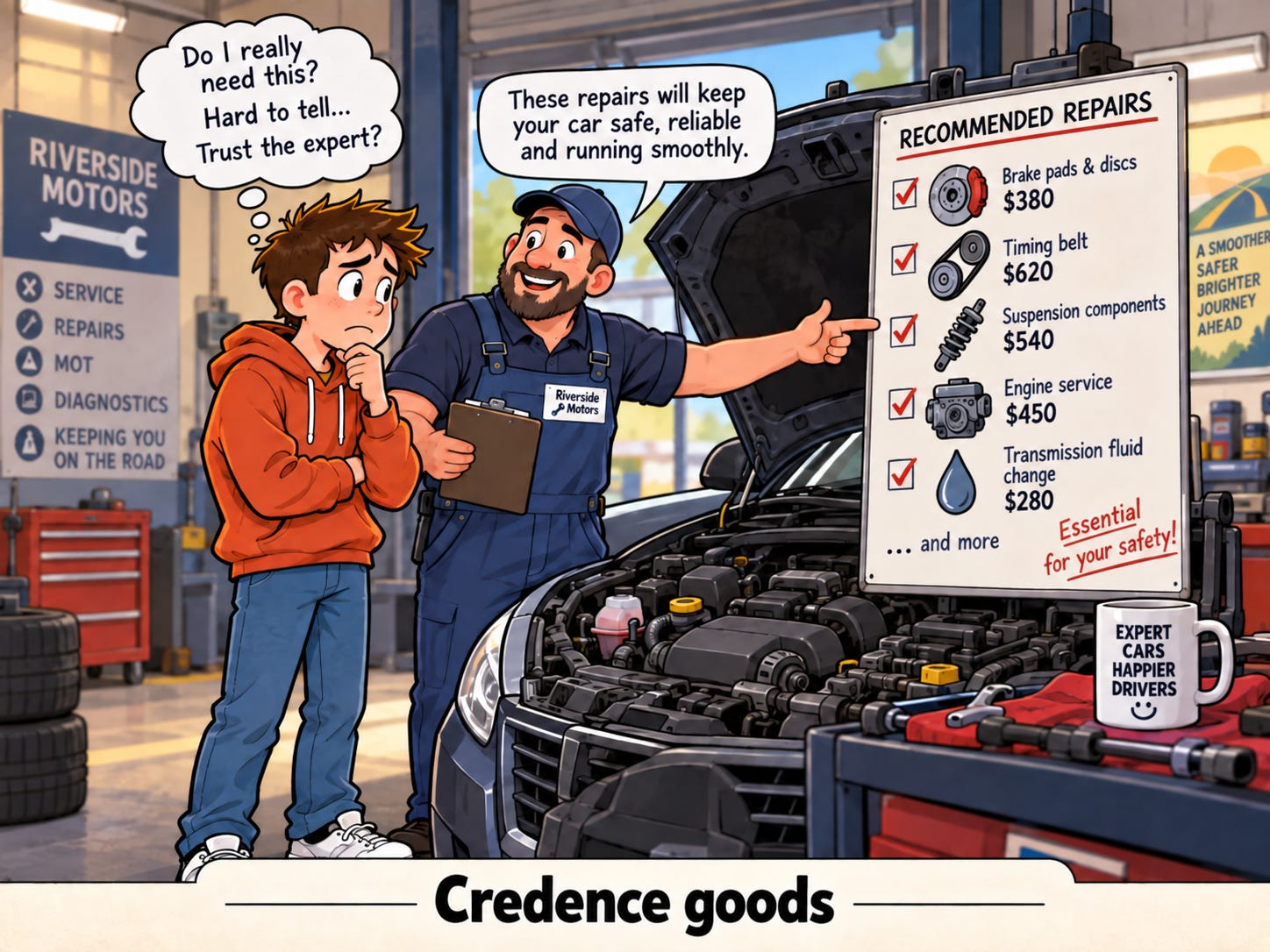
Customers can therefore be taken advantage of, in particular in one-off interactions. When such asymmetries are severe, the resulting lack of trust can even make markets partly unravel. If customers cannot distinguish good products from bad ones, they may not be willing to pay much for quality, making it harder for high-quality sellers to survive.
Frictions
Other imperfections come from frictions, in particular the cost of finding alternatives and the cost of switching to them. Finding can be hard simply because you do not know where to look. If you are a tourist looking for a good and not overpriced local restaurant, it might literally be in the next street, but because you do not know the area you may end up in a tourist trap instead.
Switching also involves costs. You have to search for alternatives, compare them, fill in forms, make phone calls and go through all the little steps required to change provider. Economics has long shown that search and switching costs can weaken competition. Economist Peter Diamond famously showed that even small search costs can, under some conditions, allow firms to charge monopoly prices.5 Switching costs can similarly give firms market power over customers who are already locked in.6
Cognitive limitations
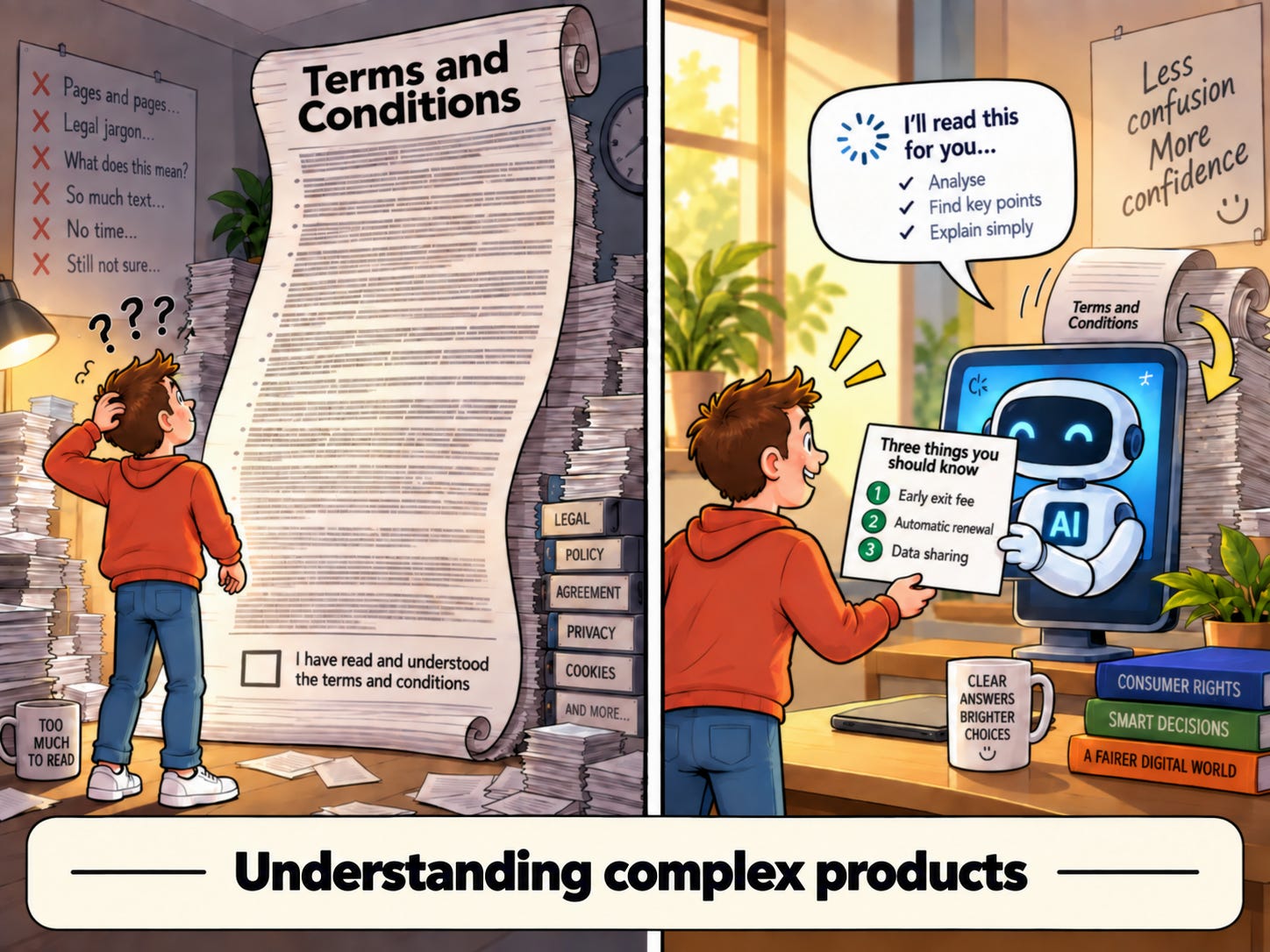
On top of that, we have cognitive limitations that contribute to these costs. Reading ten or twenty pages of terms and conditions is cognitively costly and we may not understand most of it. We also have limited time and attention.
The evidence on this is quite striking. A study that tracked 48,154 visitors to 90 software companies found that only 0.1–0.2% of potential buyers even accessed the licence agreement for at least one second.7 Reflecting this reality, the statement “I have read and understood the terms of service” has been called the “biggest lie on the Internet”.8
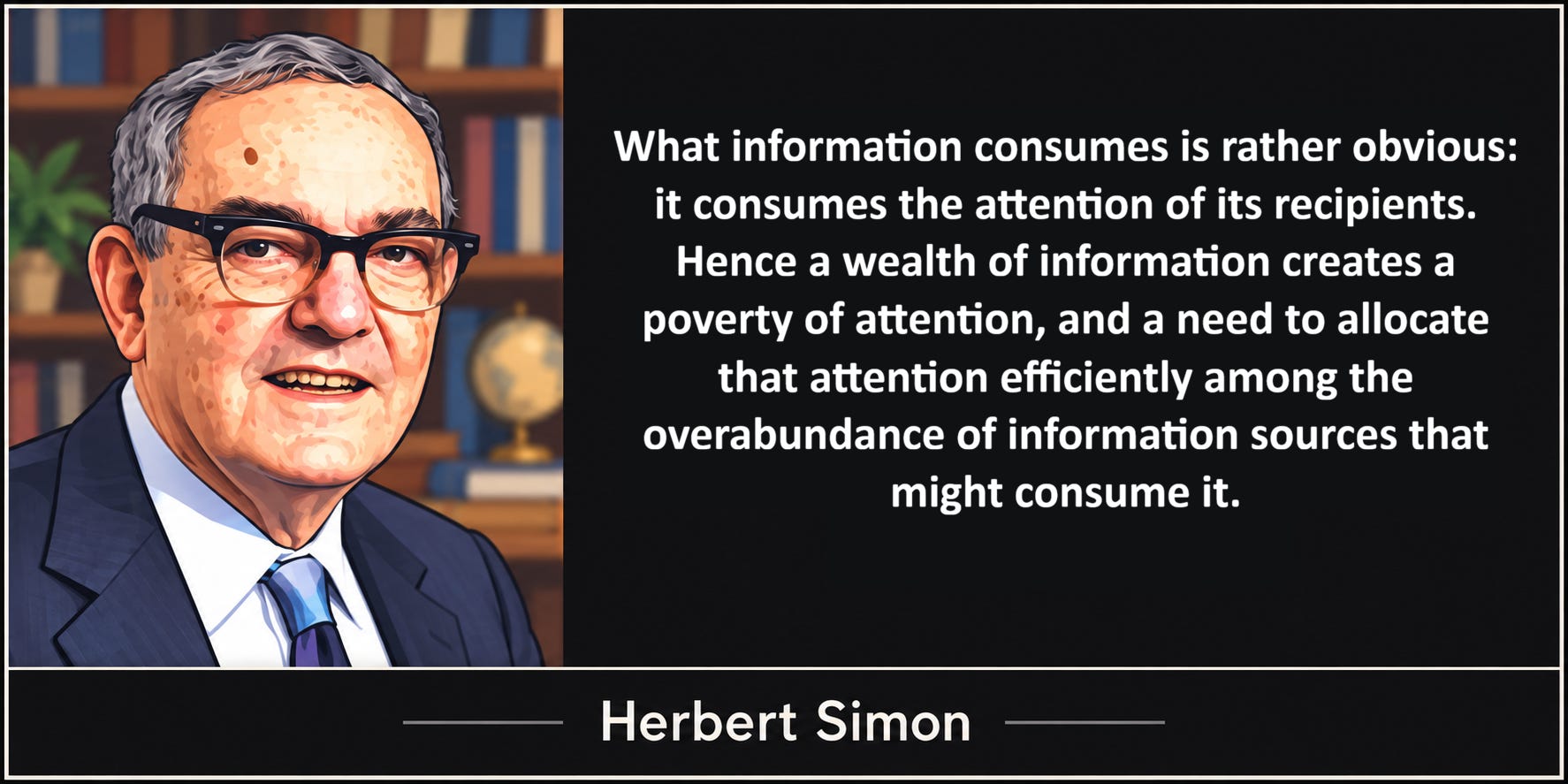
The problem is not simply that there is too little information. There can also be too much of it. More information can make it harder for consumers to find what matters, and firms may have an incentive to bury relevant information in a large amount of less useful material.9
Confusion
Firms can use these limitations to their advantage, creating sludge and what have been called “dark patterns”, features designed to trick customers into making decisions that are not necessarily in their best interest. One example is the situation where you see a price tag for a product, go through the process of buying it and find on the payment page that there are additional fees which were not disclosed upfront. Having gone so far and already invested time in the purchase, you may opt to bite the bullet and pay these additional fees instead of starting again and looking for another cheaper product.
How are such bad practices possible? Why aren’t bad firms driven out of business? The problem is that when consumers face search and comparison costs, they might not be able to discipline firms by “voting with their feet” and moving towards firms with better practices.
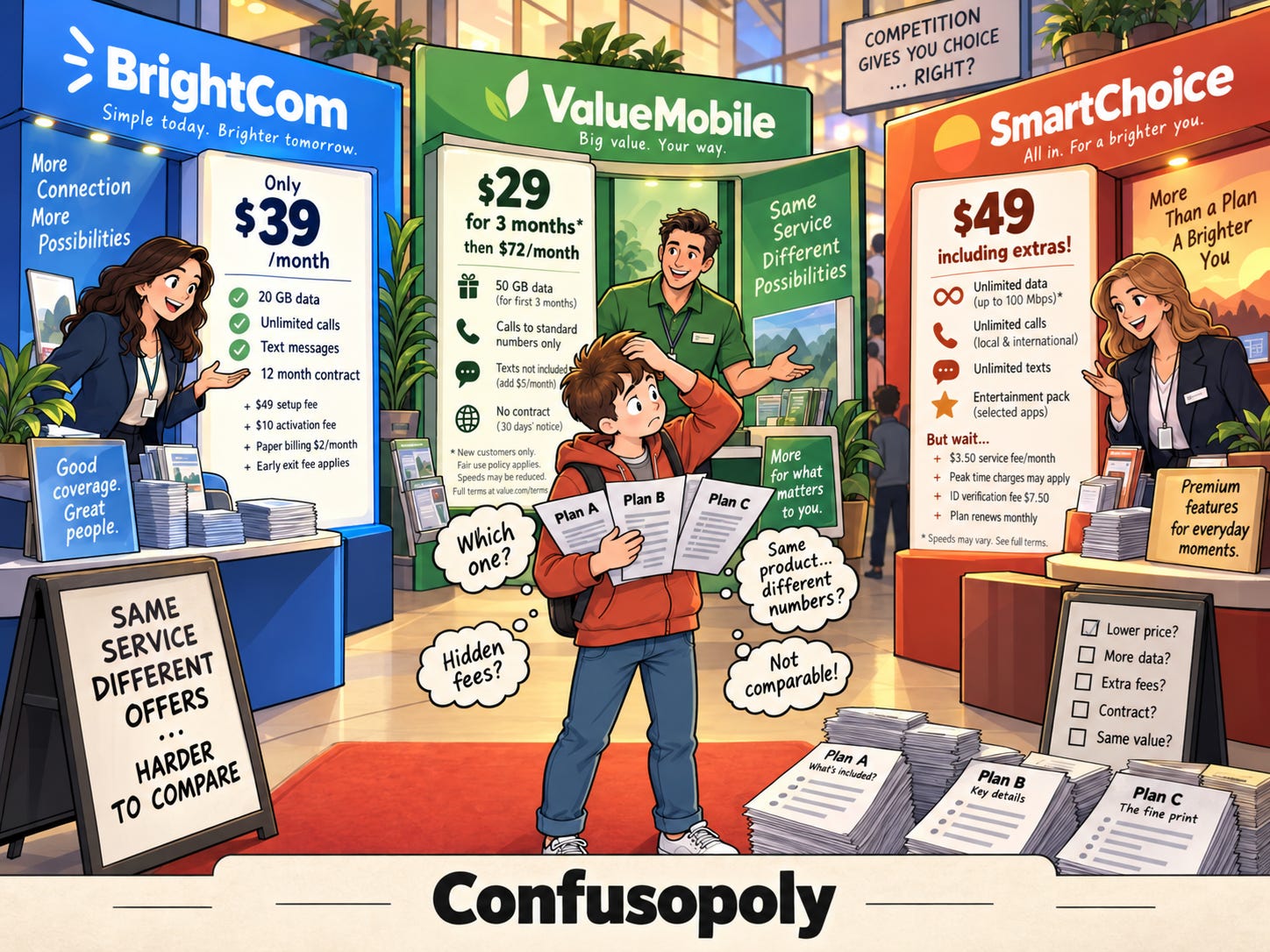
Indeed, firms may themselves have an incentive to increase search costs by making their contracts harder to compare. This is the common experience of customers having to compare mobile phone contracts or insurance contracts where features are often not easily comparable across companies. Scott Adams coined a good word for such markets in Dilbert: a “confusopoly”.10
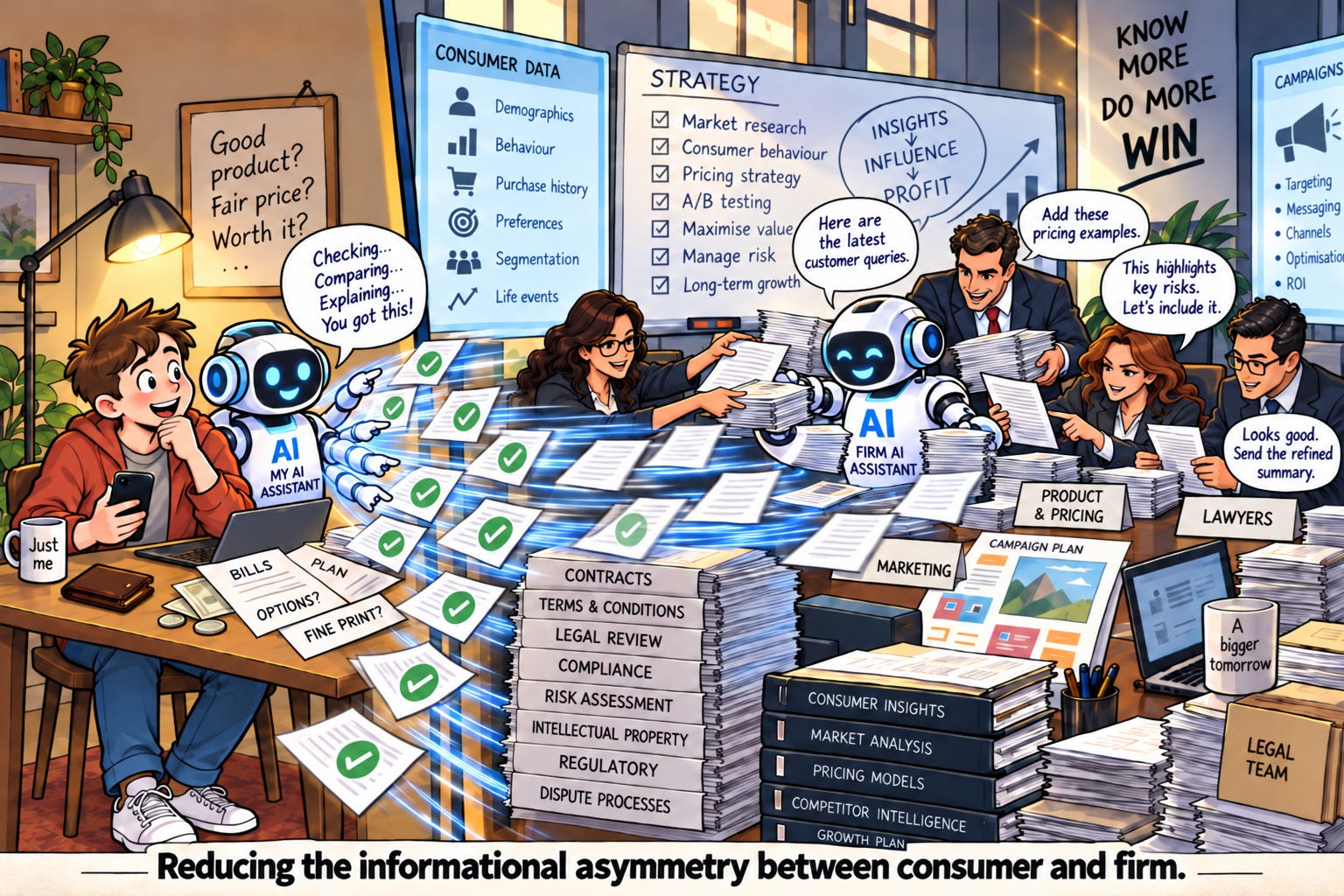
In the arms race between deception and vigilance that arises from these limitations of real markets, customers are often at a disadvantage. They are only equipped with their human brain, while companies can put armies of analysts, marketers and lawyers to work designing products, increasing profits and fending off complaints.
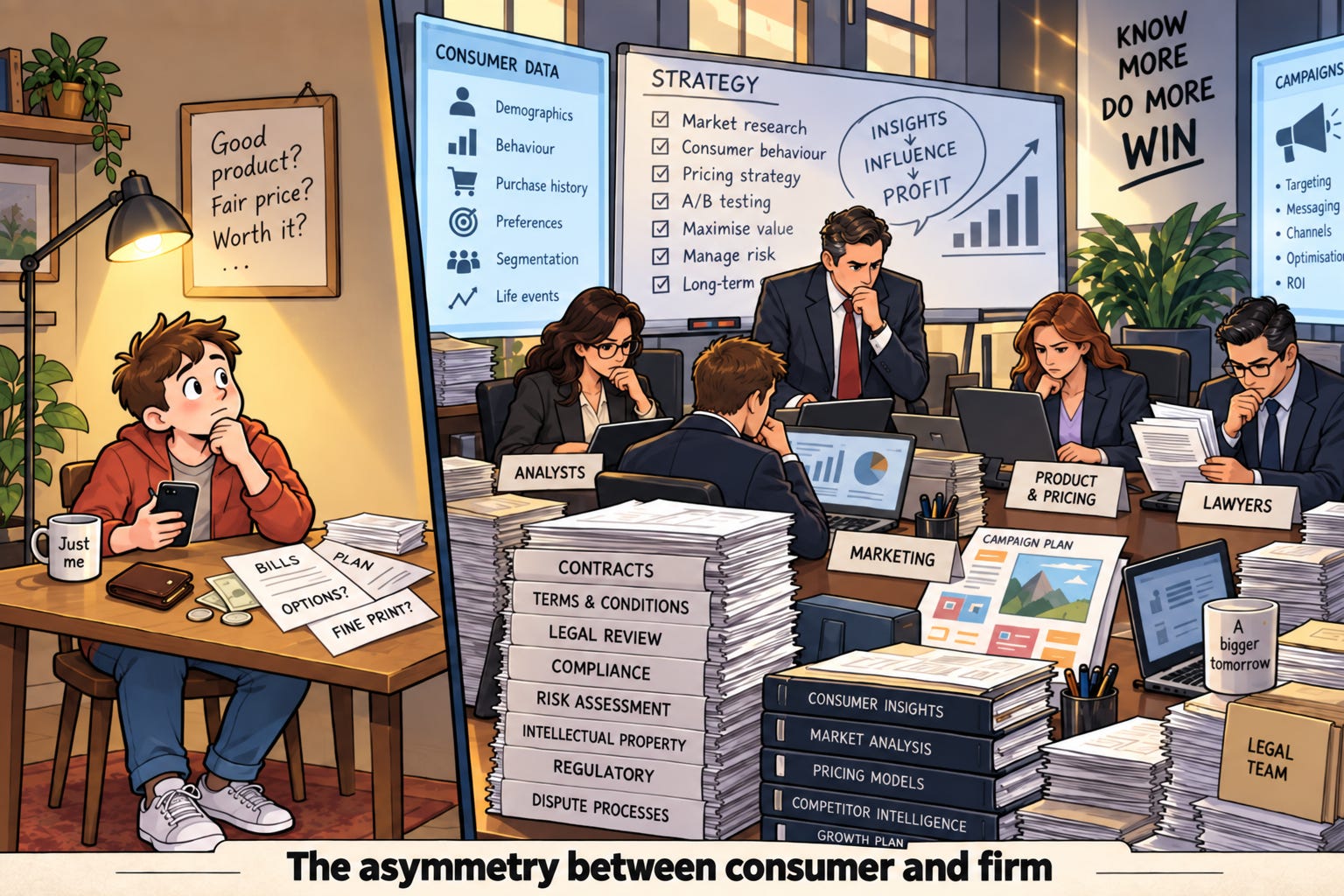
But AI may change that. Customers now have an expert price investigator, buyer and legal adviser in the palm of their hand.
How AI is now helping consumers
Search
AI can now help consumers search for products at the best price and quality. Price comparators have existed for a long time, but they are often underused because customers need to know about them, go to them and set up the relevant search. General-purpose AI models are different because people already have access to them and use them for many other purposes.
A tourist in a foreign city can simply say: “find me a restaurant with a rating above 4.5 on Google in this neighbourhood, for a budget of less than $30”. Someone buying a television can ask for the best options around a given price, taking into account reviews, reliability and the characteristics they care about.
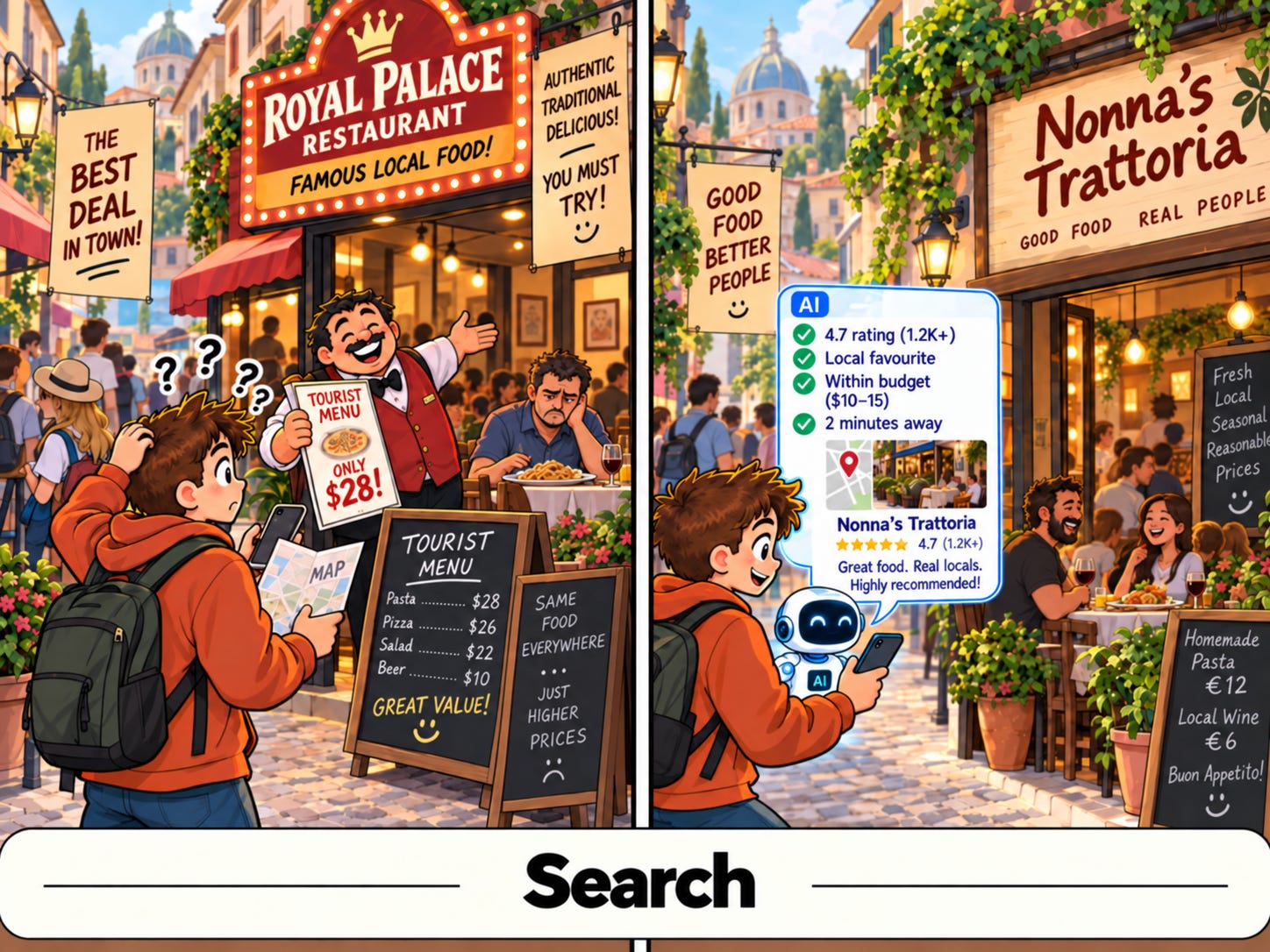
Specialised tools are already trying to do this. Vetted, for instance, is an AI shopping assistant which compares products, prices and reviews.11 The important point, though, is not that one particular tool can do it. It is that a general-purpose AI model like ChatGPT or Claude can perform the same type of search without requiring you to find and set up a separate comparison tool.
Understanding complex products
A lot of products are complex. They have many features, and the experience they will generate for the customer depends on a range of situations that may or may not happen in the future. Whether an insurance contract is good depends on what the insurer will do in the event of many possible negative shocks. Whether a car is a good one depends on how its many features will perform in situations that may arise years later.
Part of the uncertainty also pertains to the company itself: the nature of the warranties it offers, how it will handle dissatisfaction, and what happens if something goes wrong. This information is typically written in lengthy terms and conditions, in legal language, and is hardly read by customers.
With AI, customers can simply ask: “Read these terms and conditions. Is there anything I should be aware of before signing?” Or: “Compare these two insurance contracts and tell me what important risks are covered in one but not the other.” In cases where bargaining is possible between different providers, it can help you compare offers whose differences would be cryptic to a human eye and write requests to each provider pointing out the better elements in alternative offers.
Complaints
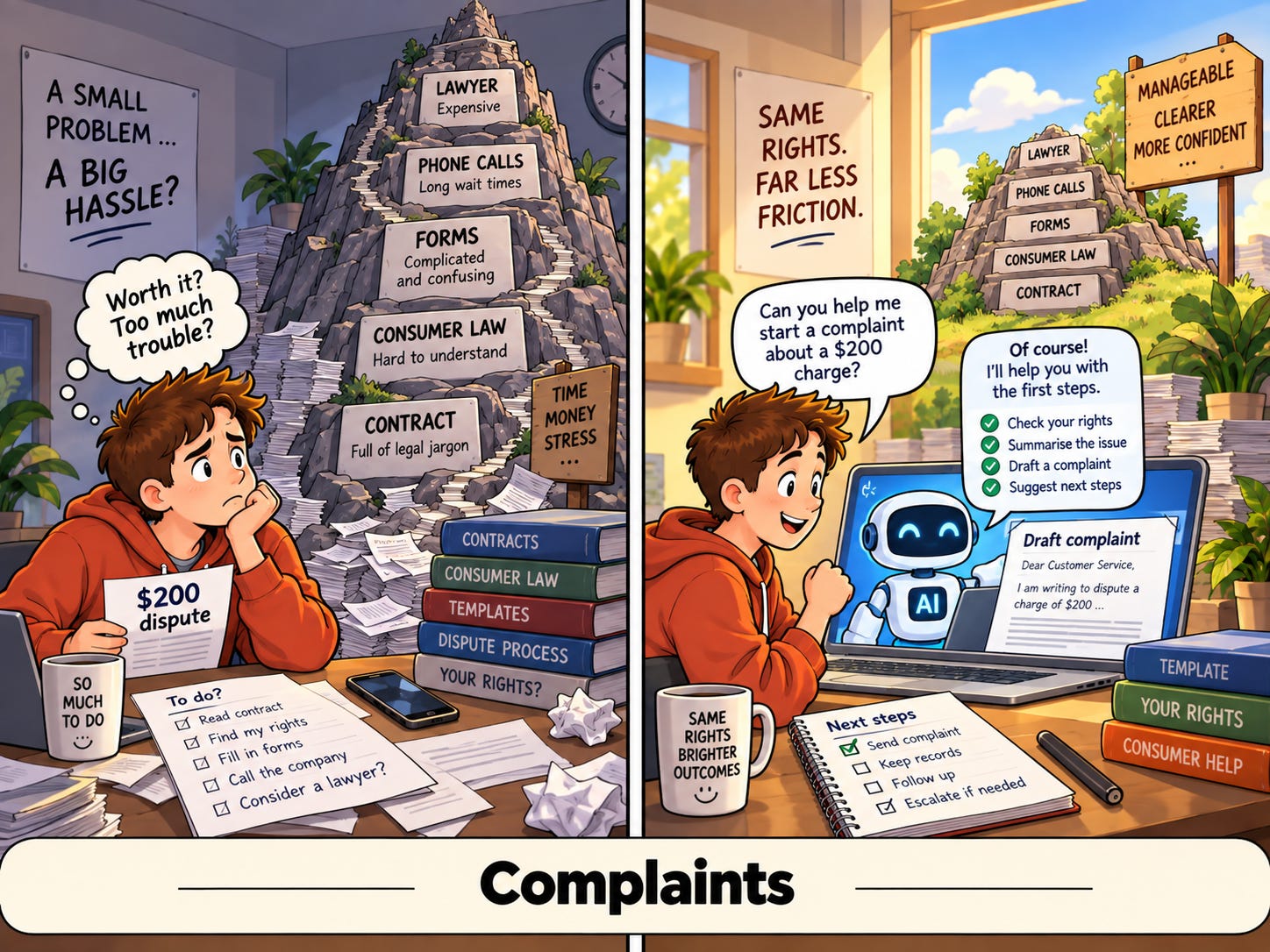
If you interact with a company with which you do little business and something goes wrong, complaining is often not worth the trouble. In many cases, it is unlikely to lead to anything more than you venting. It takes time and energy and may not remedy what went wrong in the first place.
One particular issue is that you are at a disadvantage. The company faces many customers like you. It can learn how best to handle them and how far it can push back. It can hire lawyers to design its contracts and deal with legal challenges. For a customer, a complaint may have to be worth quite a lot before it justifies engaging in such a fight, in particular if it could end up requiring a solicitor.
But AI changes the cost. You can say: “This is what happened. Please look into the contract conditions and consumer protection rules and assess my rights.” Then, if you have a case: “Write a letter of complaint describing what happened, what I want the company to do and my possible legal recourse if it refuses.”
A dispute over a small monetary amount that would never justify hiring a solicitor may be handled by your AI model at almost no additional cost. Some AI tools already try to systematise this possibility. Pine, for instance, offers AI agents designed to contact companies on behalf of customers, negotiate bills, cancel subscriptions, dispute charges and pursue refunds.12
These functions may also become common features of general-purpose AI agents. Meta’s Muse can browse websites, fill out forms, handle customer service and make purchases on behalf of the user.13 OpenAI’s recently introduced dots have their own cloud computer and can work across connected apps on behalf of their user.14
AI’s likely effects on markets
One pessimistic possibility is that firms will use AI themselves to engage in even greater levels of obfuscation. Companies will certainly use AI to design prices, analyse customers and improve their sales strategies.
But I think the overall effect is nevertheless likely to favour consumers. In the present situation, consumers are pitted against companies which know their products extremely well and can field an army of experts to get the better of customers in the deception and vigilance arms race. If both customers and companies use AI models, the gap becomes much smaller. This should reduce the profits firms can make from customer ignorance, confusion and inertia.
The effects should be particularly noticeable in markets where consumers and sellers interact only once or rarely, such as real estate, construction or car dealerships, and in markets where products are complex, such as insurance and financial contracts.
Most importantly, in equilibrium, it is not necessary for AI to catch every exploitative practice. What matters is that exploitative practices may become unprofitable for companies. A difficult cancellation process works because many customers give up. If AI agents can deal with it at very low cost, the strategy becomes less effective. Complicated pricing works less well if AI can immediately compare the true prices across firms.
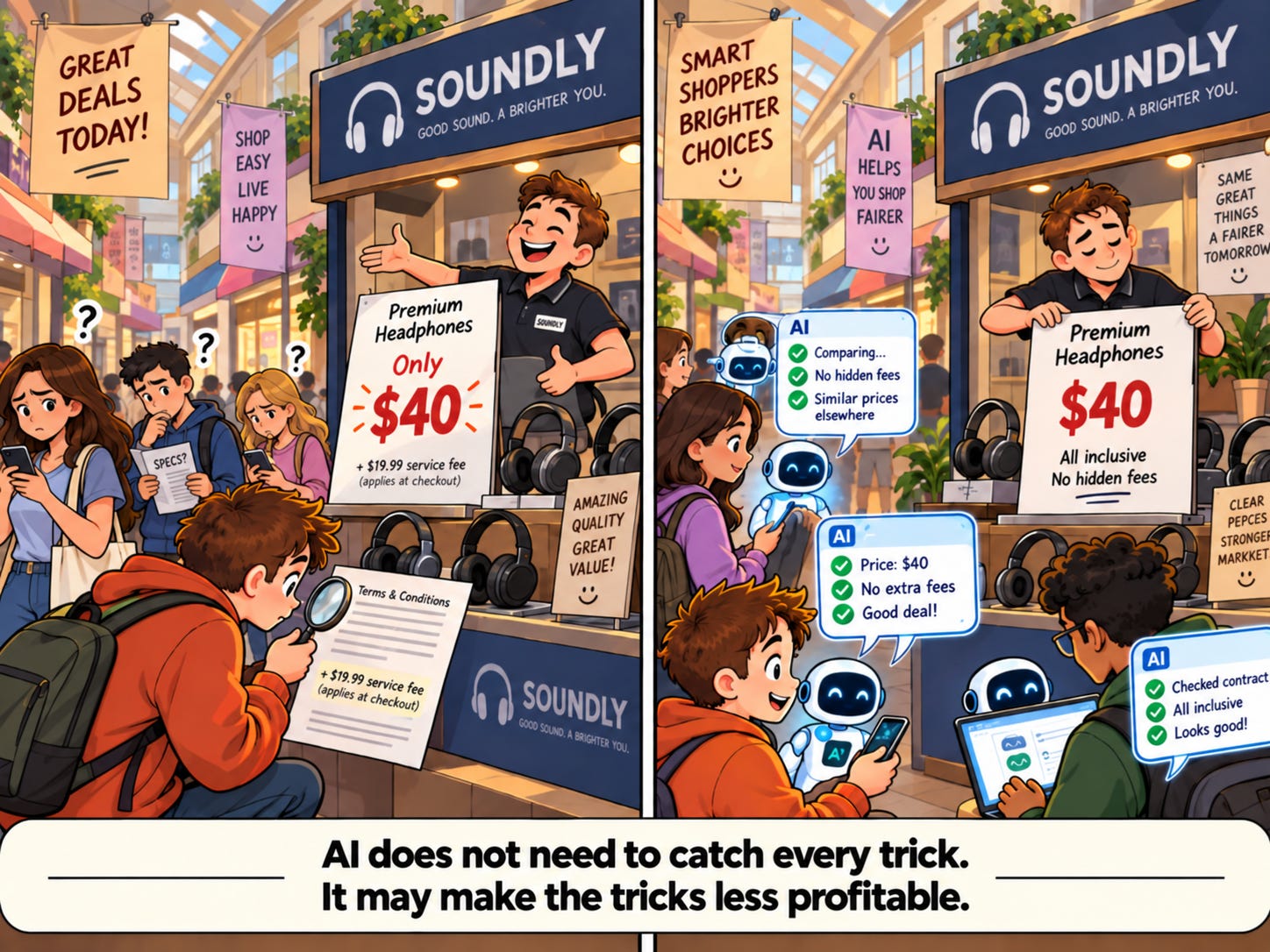
This means that the benefits may extend even to customers who do not use AI themselves. What you need is a sufficiently large proportion of customers using AI models to keep companies on their toes.

Economists’ teaching about markets features a fundamental tension. Economists see great potential in competitive markets as tools to allocate resources and organise economic activity. But they also point to a series of market imperfections that risk thwarting this potential.
One important determinant of whether markets work well is whether sellers are able to abuse the trust of customers. One striking feature of developed countries is that this trust is relatively high. Customers who buy something in a supermarket can reasonably trust that, most likely, they are buying what the supermarket claims to be selling. Widespread trust in others, institutions and commitments is considered an important ingredient of economic development, and there is substantial evidence linking social trust to economic performance and growth.15
Even in developed countries, though, trust is imperfect, as sellers can to some degree take advantage of consumers. How much they can do so varies substantially across sectors. By empowering consumers, AI may shrink further the space where firms can profit from ignorance, confusion and inertia, and therefore make markets work better simply by making consumers harder to exploit.
References
Akerlof, G. A. (1970), “The Market for ‘Lemons’: Quality Uncertainty and the Market Mechanism”, Quarterly Journal of Economics, 84(3), 488–500.
Algan, Y. and Cahuc, P. (2010), “Inherited Trust and Growth”, American Economic Review, 100(5), 2060–2092.
Bakos, Y., Marotta-Wurgler, F. and Trossen, D. R. (2014), “Does Anyone Read the Fine Print? Consumer Attention to Standard-Form Contracts”, Journal of Legal Studies, 43(1), 1–35.
Ben-Shahar, O. and Schneider, C. E. (2014), More Than You Wanted to Know: The Failure of Mandated Disclosure, Princeton University Press.
Diamond, P. A. (1971), “A Model of Price Adjustment”, Journal of Economic Theory, 3, 156–168.
Kalaycı, K. (2016), “Confusopoly: Competition and Obfuscation in Markets”, Experimental Economics, 19(2), 299–316.
Klemperer, P. (1987), “Markets with Consumer Switching Costs”, Quarterly Journal of Economics, 102(2), 375–394.
Knack, S. and Keefer, P. (1997), “Does Social Capital Have an Economic Payoff? A Cross-Country Investigation”, Quarterly Journal of Economics, 112(4), 1251–1288.
Obar, J. A. and Oeldorf-Hirsch, A. (2020), “The Biggest Lie on the Internet: Ignoring the Privacy Policies and Terms of Service Policies of Social Networking Services”, Information, Communication & Society.
Page, L. (2021), “Disclosure for Real Humans”, Behavioural Public Policy.
Persson, P. (2018), “Attention Manipulation and Information Overload”, Behavioural Public Policy, 2(1), 78–106.
Thaler, R. H. (2018), “From Cashews to Nudges: The Evolution of Behavioral Economics”, American Economic Review, 108(6), 1265–1287.
My previous posts discussed AI risks, the moral status of AI agents, and the impact of AI on peer-reviewed research, the impact of AI on the ability of laypeople to assess experts’ takes, the possible impact of AI on the higher education sector and whether AI will improve the quality of human arguments.
“The New York Times Still Makes You Call To Unsubscribe”, Forbes article.
See Thaler (2018). The NYT has since changed its cancellation policy and it can now be done online.
Akerlof (1970).
Diamond (1971).
See Klemperer (1987).
The term has since entered economics to describe markets where firms benefit from making comparison difficult (Kalaycı, 2016).
Bakos, Marotta-Wurgler and Trossen (2014).
Obar and Oeldorf-Hirsch (2020).
See Ben-Shahar and Schneider (2014), Persson (2018) and Page (2021).
See Knack and Keefer (1997) and Algan and Cahuc (2010).
I recently won a dispute with an insurance company that wanted to decline my claim by using Claude to read their justification letters, the contract and the relevant consumer protection legislation. It drafted all my responses very quickly. Very helpful and very efficient.