

This is the first post of a new series on culture. I will use the tools of game theory and cultural evolution to provide a clear picture of what culture is and show how this vision helps bring clarity to public debates on culture, from the “culture war” to “multiculturalism”.
In a famous commencement speech at Kenyon College in 2005, David Foster Wallace told the following story:
There are these two young fish swimming along and they happen to meet an older fish swimming the other way. The older fish nods at them and says, “Morning, boys. How’s the water?” The two young fish swim on for a bit, and then eventually one of them looks over at the other and goes, “What the hell is water?”
The point of the story, Wallace continued, “is merely that the most obvious, important realities are often the ones that are hardest to see and talk about”. As in this story, it can be surprisingly hard for us to understand some of the features of the social world we live in.
One of these features is “culture”. Culture is everywhere: in the music we listen to, the food we eat, the social rules we follow, the institutions of our country. It shapes what we know, what we should do and who we are. It is a shared fabric of our social lives.
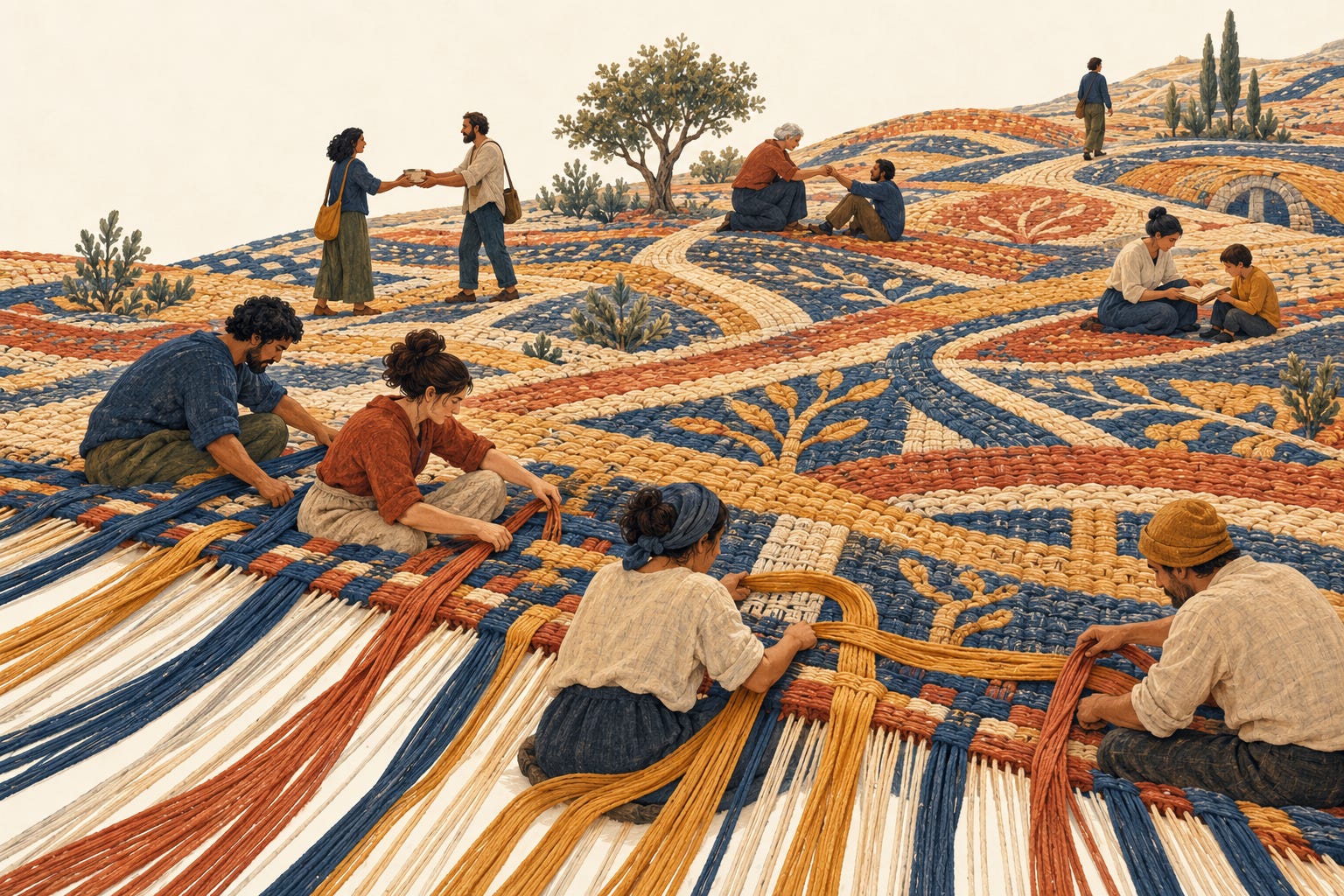
But because our behaviour, thoughts and beliefs are shaped by our culture, it is often hard for us to take the required distance to appreciate what it is exactly. Indeed, debates on culture often feature conflicting, and sometimes self-contradictory, visions of what it is. These conflicting understandings matter because culture has become central to many political debates, from the “culture war”, to the arguments about the value and feasibility of multiculturalism. In this post, I start by examining several misguided views before offering an account of what culture is.
The misguided understandings of culture
1. Culture is superficial
One vision that sometimes emerges from public discourse is that culture is a thin layer of differences in tastes and preferences. This is visible in some defences of multiculturalism, which emphasise how differences in food and music enrich society. In a discussion about London, former Prime Minister David Cameron said:
Its diversity brings with it such riches that you are left spoilt for choice in terms of cuisine, music, and cinema […] — Cameron (2006)1

Criticism
Such presentations can leave the impression that cultural differences are small and easy to accommodate. Yet, as pointed out by psychologist Michael Muthukrishna in A Theory of Everyone, they overlook that cultural differences involve more than just tastes in food and music. They concern, for instance, how much people trust those outside their immediate circle,2 whether people accept that social rules should apply impartially rather than favour close friends and family members,3 and whether they see the country’s laws as obligations to respect or constraints that are fair game to bypass when one can.4
By glossing over these differences, the superficial view offers little help in thinking about how a diverse society can work.
2. Culture is an unchanging inheritance
A radically opposed view is to see culture as something deeply ingrained in a given population, and therefore cultural differences between populations as bound to persist even when populations mix. It is a vision often held by nationalists, who might see such essential cultural differences as emerging either from a shared past or even from genetic differences across populations.
The French nationalist Maurice Barrès stressed the importance of a shared past in shaping the identity of a population:
It is not enough to say that the dead think and speak through us; the entire succession of descendants forms a single being. Certainly, under the influence of its surroundings, this being may become more complex, but that complexity will not alter its nature. It is like an architectural order that is refined: it remains the same order. — Barrès (1889)
One can go further and see culture not simply as a reflection of a population’s long shared history but as an expression of its inner nature. This is the position articulated by the Hindu nationalist Deendayal Upadhyaya:
Similarly every society has an innate nature, which is inborn and is not the result of historical circumstances. — Upadhyaya (1965)
And some see the roots of cultural differences in genetic differences across populations. In A Troublesome Inheritance, a book widely criticised by geneticists, science journalist Nicholas Wade argued that genetic differences may help explain differences in social behaviour and institutions:
[I]nstitutions that endure for many generations are strong candidates for being rooted in a genetically framed social behavior that maintains their stability. — Wade (2014)
Criticism
A population clearly inherits a culture from the history of its community. But history is also replete with examples of populations whose culture changed over time.
In his book The Origins of Political Order, Fukuyama described the problem of modern development as how to “get to Denmark”, a model of a highly functional, peaceful and prosperous society. Yet Denmark had itself to “get to Denmark”. A thousand years ago, Danes took part in Viking raids that spread terror across Europe, burning towns, killing their inhabitants and taking captives as slaves. The contrast with modern Denmark is striking. It is hard to see the peacefulness of Danes today as an unchanging feature of their culture.

Examples of populations split in two also offer us insight into the flexibility of culture. During the Cold War, Germany was divided for forty years between a communist East and a capitalist West. After reunification, East Germans differed from West Germans in many of their views: they were, for instance, more favourable to redistribution and state intervention.5 Two populations with a shared past saw cultural differences emerge after just a few decades under different institutions.6
3. Culture is primarily an instrument of domination
Another vision of culture starts from the idea that cultural ideas and practices help sustain the social order by making it appear legitimate. Marx and Engels famously stated that the dominant ideas in a society are the ideas of the dominant class. In that perspective, liberal views, religion and traditional views about gender can help justify existing inequalities. Even seemingly unpolitical activities, such as following sport, can be interpreted as distractions from oppression.
For Gramsci, dominant groups maintain their power in part by getting those they dominate to accept their situation as justified. Schools, churches, the press and intellectuals contribute to making the ideas on which the existing social order rests accepted as common sense. The more people see this order as natural and legitimate, the less coercion is needed to maintain it. In this respect, culture is like the Matrix, as Morpheus describes it.
It is the world that has been pulled over your eyes to blind you from the truth. […] That you are a slave [...]
From a related perspective, the highly influential sociologist Pierre Bourdieu examined how social domination is reproduced through seemingly natural cultural practices. Tastes for music, films and food are given a social value that reflects the relations of power in society. The tastes of dominant groups are treated as refined, while those of the lower classes are dismissed as vulgar. In this way, differences in taste acquired through upbringing can come to be seen as evidence of the superiority of people from higher social groups.
Criticism
That the power relations of a given period contribute to shaping cultural views is a reasonable stance (indeed, it is one I have made explicitly in the case of morality). But it is easy, when we see culture primarily as an instrument of domination, to assume that a practice exists only because of the inequality it helps sustain. Even if we can see why the practice suits the people who benefit from it, it may also play a positive role in society. A police force may protect the social order and the structure of privilege, while also protecting people from lower social backgrounds from being victims of crime.
The vision of culture as a mere instrument of domination does not, by itself, provide a theory articulating cultural constraints and individual agency. We need to explain why people usually follow cultural rules. A reason is that departing from these rules is costly, while individuals typically have little power to change them. At the same time, people sometimes end up opposing the prevailing rules in their society.7 We also need to explain why people would accept views that work against their interests. Contrary to the idea that people are easy to brainwash, people tend to be sceptical of social narratives they suspect might not serve their interests.8
4. Cultures are incommensurable
Another view, associated with some form of cultural relativism, holds that cultures cannot be judged by standards external to them. In this view, the criteria used to judge a practice depend on the culture to which it belongs. Often linked to anticolonialism and the rejection of Western cultural superiority, its strongest form treats cultures as incommensurable, with no universal standards by which their practices can be judged.
The same reasoning can be extended from what is right to what is true. If each culture has its own standards for knowledge, science can be seen as a specifically “Western” way of knowing. In some Western countries, public institutions have presented “Indigenous knowledge” as having an epistemic status equal to “Western science”. In New Zealand, a 2022 pilot draft for the Ministry of Education’s Chemistry and Biology curriculum stated that students would:
[R]ecognise that mauri is present in all matter which exists as particles held together by attractive forces.9
Similarly, Environment and Climate Change Canada states the need to recognise “Indigenous science as a distinct and equal science to Western science approaches”.10
Criticism
The idea that cultures are completely incommensurable is wrong. Cultures can be compared on their factual consequences, including whether people are happy living under them. The appeal of “getting to Denmark” is that it offers a society with low violence, high trust and high wealth. To the extent that Danes’ adherence to liberal and democratic views and their respect for the rule of law contribute to this success, people elsewhere might themselves see value in adopting some of these norms. Assuming that their preferences must coincide with the values of their inherited culture is itself a way of essentialising people and assigning them to the culture they were born into.
The idea that science is inherently Western is also objectively wrong. Scientific methods work in all languages and countries. They allow us to build planes that fly and computers on which to read this post. Science has earned its epistemic status by testing claims against reality and correcting mistakes. Alternative “ways of knowing” cannot claim the same status simply by appealing to tradition.11
Furthermore, although the Scientific Revolution took place in the West in the 16th and 17th centuries, scientific approaches based on observation and systematic reasoning had already developed elsewhere. Around the year 1000, China was ahead of Europe in technologies such as gunpowder and woodblock printing. During the Golden Age of Islam, scholars from Persia to Muslim Spain developed scientific theories in astronomy and physics. Ibn al-Haytham, who worked in Cairo in the 11th century, is, for instance, considered one of the pioneers of the experimental approach in science with his work on optics.
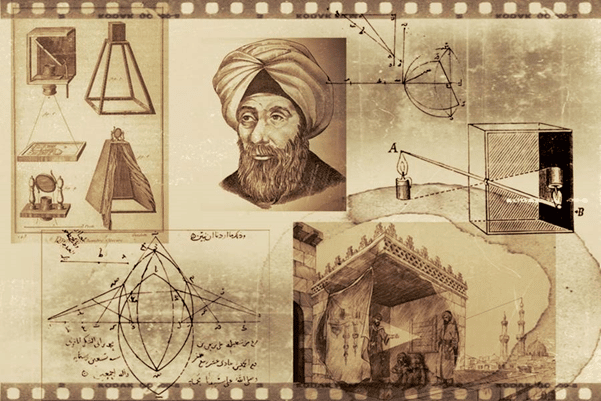
Seen against this history, the claim that science is valid only from a Western point of view is simply false. As Bertrand Russell once said:
This is one of those views which are so absurd that only very learned men could possibly adopt them. — Russell
What is culture?
As a starting point, we can rely on the definition of culture offered by Joe Henrich, a leading specialist in cultural evolution, and his co-authors.
[W]e can define culture—dropping the quotation marks—as information stored in individual brains that got there, directly or indirectly, through social learning. —Savitskiy, Mu, and Henrich (2025)
In other words, culture consists of the things in our heads that we acquire by learning from others. Evolution did not write in our DNA the taste for the food of our country, the specific religious beliefs in our community, nor our understanding of science and technology. We learn these beliefs, ideas and preferences from the people around us, who themselves inherited much of them from previous generations. This is what authors such as Joe Henrich and Michael Muthukrishna refer to as dual inheritance: we inherit both DNA and cultural elements from past generations.
This view offers a great starting point to think clearly about culture. We can build on it by looking into what exactly is being transmitted and how it is transmitted. The content of culture, ideas, beliefs and preferences, can be gathered in three categories which are key to organise social life. They answer to three fundamental questions: What do we know? What should we do? And who are we?
What we know
As we stroll around a zoo and pass by the enclosure of a chimpanzee, it can be easy to feel proud of our species’ cognitive abilities compared to our closest ape cousin. But our individual intelligence cannot explain the tremendous difference between their achievements and ours. As pointed out by Joe Henrich, we depend on a vast amount of knowledge that we could never develop on our own. Most of us would not be able to repair the dishwasher or the TV if they broke down. Most of us would be unable to explain how a mobile phone works.
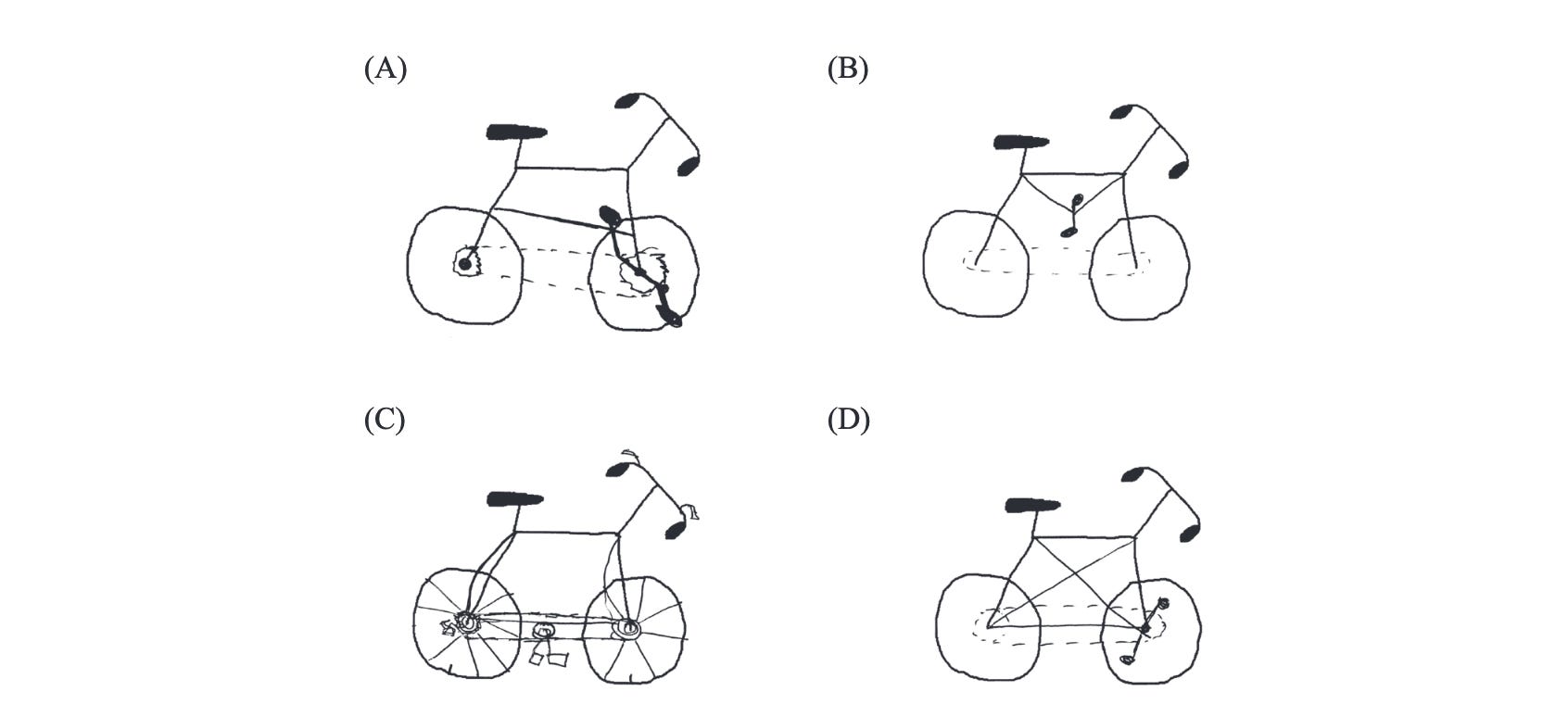
We have what has been called the illusion of explanatory depth. We feel that we understand the world we live in and the things we use much more than we do. In a famous experiment, people were asked to complete drawings of something nearly all of us know how to use: a bicycle. Many struggled to draw its basic structure correctly.
As the comedian Nate Bargatze jokes, if he were sent back in time, he would not be able to demonstrate that he came from the future: he could describe phones and satellites, but not explain how they work. What sustains our world is the large-scale cooperation of many people, drawing on knowledge accumulated over generations.

Culture makes us efficient and knowledgeable, even though, as individuals, we rarely invent new things and often barely understand the technologies we use in our daily lives.
This knowledge also concerns the social world: what people are like, how society works and what we can expect from others.
What we should do
Once people live in groups, cooperation is possible, but that leaves two questions: how to organise cooperation and how to split its gains. Many of the social norms that answer these questions can be understood as equilibria of the social games we play. Social norms regulate cooperation by specifying what people are expected to do and how others should respond to their behaviour.
Culture is also the transmission of these norms about what we should do. Many different norms are possible. In Germany, jaywalking is frowned upon; in France, it is commonplace. Paying one’s taxes can be seen as a duty towards the community, or as being a sucker when others avoid contributing. What people do depends in part on what they expect others to do and which behaviours attract approval or punishment.

Some of these norms end up being enshrined in formal institutions: written legal texts codifying rules, and social organisations with a mission to uphold them. It is easy to mistake these formal and visible elements for what holds a society together. Their effectiveness depends on how people expect others, including those responsible for enforcing the rules, to behave.
Economist Kaushik Basu develops this point in The Republic of Beliefs. Legal texts alone cannot ensure that citizens follow the law or that police officers and judges enforce it. In the end, laws are followed when people share the expectation that others will abide by them and help enforce them if they are violated. Much of what holds society together is “in our heads”.
Indeed, many, if not most, of the social rules we follow are informal. As Tocqueville stressed, these informal rules of behaviour can matter even more than formal laws:
Too much importance is attached to laws, and too little to mores. — Tocqueville (1835)
Formal and informal rules, together with the shared expectation that people will follow them, form the scaffolding that sustains the social order. People know what behaviour is considered “seemly” in their society and expect others to behave accordingly. This makes possible cooperation in large groups, the main source of human success.
But the gains from cooperation inevitably raise the question of how they are distributed. In game theorist Ken Binmore’s account of fairness, social rules, from formal laws to informal norms, also answer this question by specifying who is entitled to what, who exercises authority and whose demands are considered legitimate. Binmore suggests that these rules guide social bargaining over rights and duties by giving more or less weight to different people’s needs and claims. We can think of this relative weight as reflecting people’s social standing. This standing is visible in the status and respect they command in social interactions, and it shapes what others regard as their fair share. Across times and places, cultures differ in the standing they ascribe to people according to their social background, profession, gender or ethnicity.
Who we are
One particular thing transmitted culturally is an understanding of which social groups exist and what their identity is. Part of what we know is “who we are”, who the “others” are, and what defines “us” and distinguishes us from “them”.
These questions arise naturally from coalitional considerations: humans benefit from social cooperation, but there are also potential conflicts between groups. It is therefore important to be able to identify who belongs to our group and who does not. Many cultural practices, from clothing and food to language and rituals, help identify and distinguish “our” group from others.
Groups face threats from outside, and these threats make loyalty particularly important. If a country is attacked, will people take up arms, or hide or flee to avoid personal risk? Will citizens defend their community or open the gates of their besieged city under the cover of night?
This concern with loyalty also helps explain why seemingly benign cultural practices such as food and clothing can acquire strong moral weight. Following them can signal an attachment to the group and its rules. People’s attachment to their culture partly reflects this connection between shared practices and group membership. Familiar food, ways of speaking and customs contribute to the shared understanding that people belong to the same community, that there is an “us” and a “them”.12

For that reason, part of what is transmitted is also the remembered, and often selected and reconstructed, history of the community: national and historical myths, stories of gods’ creation and favour, and accounts of heroic victories that allowed the community to secure its land and continue to exist.
Understanding culture matters for modern debates
Culture war
The term “culture war” is often used pejoratively to describe people getting lost in somewhat unnecessary debates about what words to use and what practices to accept.
But the vision of culture I described here makes it clear that “culture” is a natural arena of conflict. To start with, formal laws define the rights and duties of members of society. People have an interest in having more rights and fewer duties. Even in formally equal societies, questions about how much tax the rich should pay or up to what point in pregnancy and under what conditions abortion should be allowed cannot be settled by logic alone. They require weighing competing interests and claims. Lawmaking is therefore at the centre of these conflicts.
Beyond formal laws, the distribution of social standing is woven into social norms. A central question in “culture wars” is how much respect particular social groups can command in society. Are workers valued as wealth creators or, as they could be in seventeenth-century France, disparaged because they have to use their time and effort to earn a living? Are women seen as just as capable as men of contributing to society, or are they regarded in some ways as closer to children? Are people with disabilities seen as less worthy members of society, or as equal members who deserve the support they need to participate fully in it?
Social standing is not just symbolic. It carries with it the shadow of all the future situations in which people will bargain over rights and duties in society. Whether workers’ contribution is valued or disparaged will affect the fair share they can claim in the allocation of resources. Whether women are given the same standing as men will affect whether formal and informal rules entitle them to the same social positions, with the same status, autonomy and opportunities.
Culture wars are marked by the kind of resentment Francis Fukuyama discusses in his book Identity. It is the resentment of groups who think their social standing, the respect they command in society, is not as high as it deserves to be. For many of these groups, the demand is for equal respect, so that their needs and claims receive the same consideration as those of others. Culture wars are therefore not trifling nonsense. They are about fundamental things people care about.
As societies change, so does the distribution of recognition and rights that can sustain a stable social order. These conflicts carry two kinds of risk. On the one hand, a refusal to change the rules as bargaining power in society shifts can eventually lead to instability and conflict. Society needs to move with the times. On the other hand, reformers might underestimate how much the social order relies on rules that people have long agreed on. Rejecting inherited norms wholesale and trying to rebuild them from scratch risks costly unintended consequences.
The idea that culture is primarily about domination by elite classes and dominant groups can make it seem that society would be more just if we did away with some of its institutions. Consider, for instance, the call to “defund the police” in the United States in 2020. Some of its proponents saw the police as an institution that helped sustain systemic racism. Cutting police budgets and redirecting the money to community services was seen as a way to make society more just.
But police are actually important to maintain social order and limit crime. The natural experiment that took place in Seattle helps illustrate this risk. During the 2020 protests, police withdrew from the area occupied by protesters, known as the Capitol Hill Occupation Protest (CHOP). A comparison of recorded crimes during the 24-day occupation with a control constructed from similar streets elsewhere in Seattle found 133% more crime in the CHOP zone. Since racial minorities are disproportionately victims of serious violent crime, reducing policing risks hurting the very communities that advocates of defunding the police seek to protect.13
Reflecting on the upheaval of the French Revolution, Edmund Burke had correctly identified these two risks when considering the required balance between change and stability:
A disposition to preserve, and an ability to improve, taken together, would be my standard of a statesman. — Burke (1790)
Multiculturalism
The understanding of culture I gave is also critical to answering the questions raised by public debates about multiculturalism. Cultural diversity makes two of the questions I discussed above harder to answer. What should we do? And who are we?
What we should do
Cultural diversity is often praised for enriching society, but culture is not just about superficial differences in tastes for food and music. Shared norms are part of the commonly agreed-upon scaffolding on which the social order rests. Cultural differences between groups living together can fragment this common agreement and therefore strain the social order. As pointed out by Michael Muthukrishna, there is a “paradox of diversity”: cultural differences can enrich a society while also creating divisions and conflicts.
Progressives who want an inclusive society often stress the importance of accepting and respecting differences. As well-intentioned as it is, a mere focus on accepting differences easily leads to overlooking how much people need to have in common for a society to work. A community’s shared culture includes commonly understood and accepted views about what we should do: the formal and informal rules to follow for social interactions to run smoothly in a given community.
Who we are
The understanding of culture I described points to its role in identifying in-groups and out-groups, us and them. In doing so, cultural identities shape the outcomes of coalitional games that are consistently played out in society. Cultural differences within a given community create natural lines of coalitional division. The potential stability of these coalitional divisions can weaken the common attachment to democratic institutions. Democracy works when those who lose believe they have a real chance of winning tomorrow. When a society is divided into rigid coalitional blocs, members of a persistent minority might consider that the rules of the democratic game give them too little chance of winning.14
Most Western democracies have institutions built primarily around the rights and duties of individual citizens. In culturally divided countries, institutions may also recognise stable groups and the potential for conflict and distrust between them. Political scientists McGarry, O’Leary and Simeon have proposed calling such institutions accommodationist: they give cultural communities a role in how power is distributed. This is the case in countries as different as Belgium, India and Lebanon.15 Such arrangements can help contain conflict by giving different communities a stake in government. Kymlicka, a philosopher defending multiculturalism, argued that recognising some minority rights can also help integrate minorities into a common political community. But whether it is the case and to what extent is an empirical question. It is also possible that making group identity a basis for distributing political power risks entrenching communal divisions.
These two challenges suggest that making a diverse society work requires not just respect for differences but also a shared culture and identity. This is part and parcel of the history of many modern countries, which became culturally more unified from a more fragmented past. In their book The New Psychology of Leadership, Haslam, Reicher and Platow explain the role of leaders in building a narrative of “us”. They illustrate the challenge of building such a narrative in multicultural countries with the example of the first Governor-General of the newly independent country of Pakistan, Muhammad Ali Jinnah, who had to lead a country with deep cultural divisions.
He literally brought Pakistan into being and he did so symbolically as well as practically, using his own self as an emblem of the new country. […] On his head he wore the karakuli, a black sheepskin cap as worn by the Muslims of North India. On his back he wore the sherwani (a knee-length black coat as worn by the Muslims of Aligarh). On his legs he wore the shalwar (baggy trousers worn by Muslims in the west of the country). Altogether his attire thus constituted the national dress and helped constitute the nation itself—not just the meaning of Pakistan, but the very reality of a Pakistani entity. — Haslam, Reicher and Platow (2011)
The misguided views about culture I described fail to recognise the value of such an overarching identity and culture above those of different communities. On the right, essentialist views about culture can lead people to see cultures as immutable and incompatible, without any space left to “make society” with a common culture. On the left, the idea that culture is about superficial tastes can make the idea of a common culture seem unnecessary, or possibly a cultural impoverishment if people were to look more alike. The view that cultures are incommensurable also conflicts with this view, often considering the culture of each community as sacred and resisting any cultural integration, in particular if its centre of gravity is closer to the culture of the majority of the population. The risk is to overlook or resist efforts to build a shared culture that can reduce conflicts and foster trust and cooperation.

Culture is what allows humans to accumulate knowledge across generations and cooperate on a scale no other species can. It pervades our lives, and yet most of us would struggle to define it or explain how it works. In this post, I have argued that game theory and cultural evolution help us see culture as information acquired through social learning that shapes what we know, what we should do and who we are.
From the culture war to the debate on multiculturalism, the way we think about culture has practical consequences. Seeing cultural differences as superficial differences in taste can lead us to overlook disagreements about the rules of social cooperation. Seeing culture primarily as an instrument of domination can lead us to overlook how inherited norms help hold society together. Treating culture as an unchanging essence of a population can lead us to overlook how culture can adapt and change.
The challenge is to allow for the cultural changes needed as society itself changes while preserving the shared expectations and sense of belonging that make society cohesive and functional. Meeting this challenge is an exercise in social bargaining. To do it well, we need to recognise both that conflicts over culture are unavoidable because culture shapes our rights, duties and standing, and that the gains from large-scale cooperation depend on agreement about the rules we live by.
References
Alesina, A. and Fuchs-Schündeln, N. (2007) ‘Good-bye Lenin (or not?): The effect of communism on people’s preferences’, American Economic Review, 97(4), pp. 1507–1528.
Algan, Y. and Cahuc, P. (2010) ‘Inherited trust and growth’, American Economic Review, 100(5), pp. 2060–2092.
Bargatze, N. (2015) ‘Nate Bargatze: Full Time Magic – Time Travel’ [Video]. Comedy Central Stand-Up, 27 April.
Barrès, M. (1889) Un homme libre. Paris: Perrin.
Basu, K. (2018) The republic of beliefs: A new approach to law and economics. Princeton, NJ: Princeton University Press.
Bauernschuster, S. and Rainer, H. (2012) ‘Political regimes and the family: How sex-role attitudes continue to differ in reunified Germany’, Journal of Population Economics, 25(1), pp. 5–27.
Binmore, K. (2005) Natural justice. Oxford: Oxford University Press.
Boelmann, B., Raute, A. and Schönberg, U. (2025) ‘Wind of change? Cultural determinants of maternal labor supply’, American Economic Journal: Applied Economics, 17(2), pp. 41–74.
Bogaards, M. (2026) ‘Consociationalism in Belgium’, in Reuchamps, M., Brans, M., Meier, P. and van Haute, E. (eds) The Oxford handbook of Belgian politics. Oxford: Oxford University Press, pp. 80–93
Bourdieu, P. (1979) La distinction: Critique sociale du jugement. Paris: Les Éditions de Minuit.
Boyd, R. and Richerson, P.J. (2024) ‘Cultural evolution: Where we have been and where we are going (maybe)’, Proceedings of the National Academy of Sciences, 121(48), article e2322879121.
Burke, E. (1790) Reflections on the Revolution in France. London: J. Dodsley.
Chima, J.S. (2021) ‘India as a “crypto-ethnic democracy”: The dynamics of “control” in relation to peripheral ethnic minorities’, Third World Quarterly, 42(12), pp. 2822–2840.
Choudhry, S. (2009) ‘Managing linguistic nationalism through constitutional design: Lessons from South Asia’, International Journal of Constitutional Law, 7(4), pp. 577–618.
Coyne, J.A. (2021) ‘“Ways of knowing”: New Zealand pushes to have “indigenous knowledge” (mythology) taught on parity with modern science in science class’, Why Evolution Is True, 3 December.
Dinesen, P.T. (2013) ‘Where you come from or where you live? Examining the cultural and institutional explanation of generalized trust using migration as a natural experiment’, European Sociological Review, 29(1), pp. 114–128.
Environment and Climate Change Canada (2025) Indigenous science. Ottawa: Government of Canada.
Evening Standard (2012) ‘Cameron courts “diversity” vote with curry’, 13 April.
Fisman, R. and Miguel, E. (2007) ‘Corruption, norms, and legal enforcement: Evidence from diplomatic parking tickets’, Journal of Political Economy, 115(6), pp. 1020–1048.
Fukuyama, F. (2011) The origins of political order: From prehuman times to the French Revolution. New York: Farrar, Straus and Giroux.
Fukuyama, F. (2018) Identity: The demand for dignity and the politics of resentment. New York: Farrar, Straus and Giroux.
Gächter, S. and Schulz, J.F. (2016) ‘Intrinsic honesty and the prevalence of rule violations across societies’, Nature, 531(7595), pp. 496–499.
Gramsci, A. (1971) Selections from the prison notebooks. Edited and translated by Q. Hoare and G. Nowell-Smith. London: Lawrence & Wishart.
Haslam, S.A., Reicher, S.D. and Platow, M.J. (2011) The new psychology of leadership: Identity, influence, and power. London: Psychology Press.
Henrich, J. (2016) The secret of our success: How culture is driving human evolution, domesticating our species, and making us smarter. Princeton, NJ: Princeton University Press.
Horowitz, D.L. (1985) Ethnic groups in conflict. Berkeley, CA: University of California Press.
Kilmartin, P.A. (2022) ‘Mātauranga Māori and chemistry teaching: “Mauri is present in all matter”’, Chemistry in New Zealand, 86(4), pp. 157–164.
Kleinschrot, L. (2024) ‘Consistent egalitarianism or heterogeneous belief patterns? Gender ideologies in contemporary East and West Germany’, Zeitschrift für Soziologie, 53(4), pp. 387–403.
Kymlicka, W. (1995) Multicultural citizenship: A liberal theory of minority rights. Oxford: Clarendon Press.
Lawson, R. (2006) ‘The science of cycology: Failures to understand how everyday objects work’, Memory & Cognition, 34(8), pp. 1667–1675.
McGarry, J., O’Leary, B. and Simeon, R. (2008) ‘Integration or accommodation? The enduring debate in conflict regulation’, in Choudhry, S. (ed.) Constitutional design for divided societies: Integration or accommodation? Oxford: Oxford University Press, pp. 41–88.
Marx, K. and Engels, F. (1970) The German ideology. Edited by C.J. Arthur. London: Lawrence & Wishart.
Mercier, H. (2020) Not Born Yesterday: The Science of Who We Trust and What We Believe. Princeton, NJ: Princeton University Press
Ministry of Education (2022) Chemistry and biology learning matrix: Curriculum level 6. Draft for pilot 2022. Wellington: Ministry of Education.
Muthukrishna, M. (2023) A theory of everyone: The new science of who we are, how we got here, and where we’re going. Cambridge, MA: MIT Press.
Piza, E.L. and Connealy, N.T. (2022) ‘The effect of the Seattle police-free CHOP zone on crime: A microsynthetic control evaluation’, Criminology & Public Policy, 21(1), pp. 35–58.
Price, M.D. (2021) Evolution of a taboo: Pigs and people in the ancient Near East. New York: Oxford University Press.
Rozenblit, L. and Keil, F. (2002) ‘The misunderstood limits of folk science: An illusion of explanatory depth’, Cognitive Science, 26(5), pp. 521–562.
Russell, B. (1959) My philosophical development. London: George Allen & Unwin.
Salamey, I. and Payne, R. (2008) ‘Parliamentary consociationalism in Lebanon: Equal citizenry vs. quotated confessionalism’, The Journal of Legislative Studies, 14(4), pp. 451–473.
Savitskiy, V., Mu, R. and Henrich, J. (2025) ‘Cultural evolution for economists’. Unpublished draft chapter for the Handbook of Cultural Economics, 3 June.
Schulz, J.F., Bahrami-Rad, D., Beauchamp, J.P. and Henrich, J. (2019) ‘The Church, intensive kinship, and global psychological variation’, Science, 366(6466), article eaau5141.
Tabellini, G. (2008) ‘Institutions and culture’, Journal of the European Economic Association, 6(2–3), pp. 255–294.
Tocqueville, A. de (1835) De la démocratie en Amérique. Paris: Charles Gosselin.
Upadhyaya, D. (1965) ‘Integral humanism’, lecture 3, Bombay, 24 April.
Wade, N. (2014) A troublesome inheritance: Genes, race and human history. New York: Penguin Press.
Cameron Interview in the Evening Standard in 2012
On cultural differences in generalised trust and their persistence across generations, see Algan and Cahuc (2010). On variation of trust as a function of the cultural background and the quality of institutions in a country, see Dinesen (2013).
For evidence on cultural differences in the willingness to apply the same impartial rules to everyone, without advantaging members of a smaller inner circle (e.g. family, friends) see Tabellini (2008) and Schulz et al. (2019).
Fisman and Miguel (2007) find that UN diplomats (protected by diplomatic immunity) from countries with higher corruption accumulated more unpaid parking violations in New York. Gächter and Schulz (2016) find that participants from societies where rule violations are more widespread are also less honest in an experiment where individual cheating cannot be detected.
Alesina and Fuchs-Schündeln, (2007). The difference remained even after accounting for people’s economic circumstances.
Kleinschrot (2024) and Boelmann, Raute and Schönberg (2025).
Gramsci himself recognised that people sometimes question the views they have grown up with and organise to change them.
See Mercier (2020).
Mauri refers to a vital essence or life force attributed to living things and physical objects. See the discussion by Jerry Coyne.
Statement of the Canadian government on Indigenous science.
It is clear that old traditions have contained some true beliefs or useful techniques. But this does not give them the same epistemic status as science. What matters is the method used to distinguish true claims from false ones and to correct mistakes.
Let’s take, for instance, the moral duty not to eat pork that is part of the injunctions of Judaism and Islam. The absence, or near absence, of pig bones in many early Israelite settlements in the Iron Age suggests that the practice existed before the biblical law was fully codified. The archaeologist Max Price argues in Evolution of a Taboo: Pigs and People in the Ancient Near East that the taboo evolved over time: first in opposition to pork-eating Philistines, and later through its mobilisation by Judah’s kings and priestly class as they sought to consolidate a pan-Israelite identity after the fall of the Northern Kingdom.
See Horowitz (1985, p. 86).
For Belgium’s linguistic power-sharing, see Bogaards (2026). For India, see Choudhry (2009) on linguistic federalism and Chima (2021) on how accommodation and coercion have coexisted in India’s relations with ethnic and religious minorities in its peripheral regions. For Lebanon’s allocation of parliamentary seats by religious community, see Salamey and Payne (2008).