

In this series of posts, I am explaining what human morality is. In previous posts, I have described how thinking of fairness norms as generic solutions to the everyday problem of allocating rights and duties in society leads to simple answers to many classical questions in political philosophy, such as whether a just society should protect freedom or foster equality. Here, I discuss what people will commonly agree is fair in modern democratic societies.
In 494 BCE, in the early days of ancient Rome, its common citizens, the plebeians, withdrew from the city in an early form of political strike. They were demanding debt relief and protection against domination by the patricians, Rome’s hereditary aristocratic elite. When the patricians asked them to return, Sicinius, one of the leaders of the plebeians, stressed that exit from a society whose social contract no longer worked for them remained one of their options:
As for us, we shall be content to regard as our country any land, whatever it be, in which we may enjoy our liberty.1
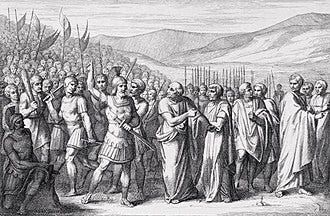
The “Secession of the Plebs” illustrates how a social group unhappy with a social contract might always decide to stop playing ball and withdraw itself from social cooperation if it deems the social contract unacceptable. For society to work, social groups need to agree on how to organise society, with its distribution of duties and rewards.
So how do people agree on what an acceptable society is? Let’s face it, answering this question seems pretty much intractable. Political debates are filled with many ideological positions that seem irreconcilable and sometimes hard to compare. There are questions of individual rights, the allocation of economic resources, the efficiency of economic policy, and so on. How can we know who is right?
We can provide clear answers to these questions by first setting aside the noise of everyday political discourse and going to the crux of social justice: the bargaining between different social groups over a social contract that specifies how to share the benefits from social cooperation.
The key question of justice: Equality or maximum happiness?
Let’s consider a society in which there are two groups of citizens, like the rich and the poor. Let’s assume they have full information about natural and social laws so that they know how each possible social contract will work. This simple setting is useful to get clear conclusions about what social contract would be chosen. This is the setting used by game theorist Ken Binmore in Game Theory and the Social Contract (1994, 1998).
Since society members have full information about how different social contracts would work and impact them, their problem is only to agree on which social contract to adopt, given the benefits each social contract would provide to each group.
Let’s consider Alice and Bob as the representatives of the two social groups in society. For example, Alice might be the representative of the patricians and Bob of the plebs. They have to decide how to agree on a social contract. If one of them secedes and stops playing ball, the social contract breaks down.
Social contracts specify all the rules to follow in society. Some organisations of society are more likely to lead to wealth creation. We have, for instance, learned from history that communist societies tend to end up poorer than capitalist ones. But social contracts also lead to a distribution of resources. Communist societies tend to be more equal than capitalist societies.
When choosing between efficient social contracts, Alice and Bob would have to consider two key aspects of their consequences: the total amount of wealth produced and how this wealth is split between the different members of society.
Let’s consider Alice and Bob working together in a pizza shop. Bob cooks, and Alice is at the till. Let’s assume that Alice and Bob have organised their pizzeria efficiently to make the most pizza possible during a day. The remaining question will be how to split the gains from the pizzas. To make the question interesting, we will assume that Bob’s motivation depends on his share of income. The more money he gets for each pizza, the harder he works to cook pizzas. We will also assume they are all sold.
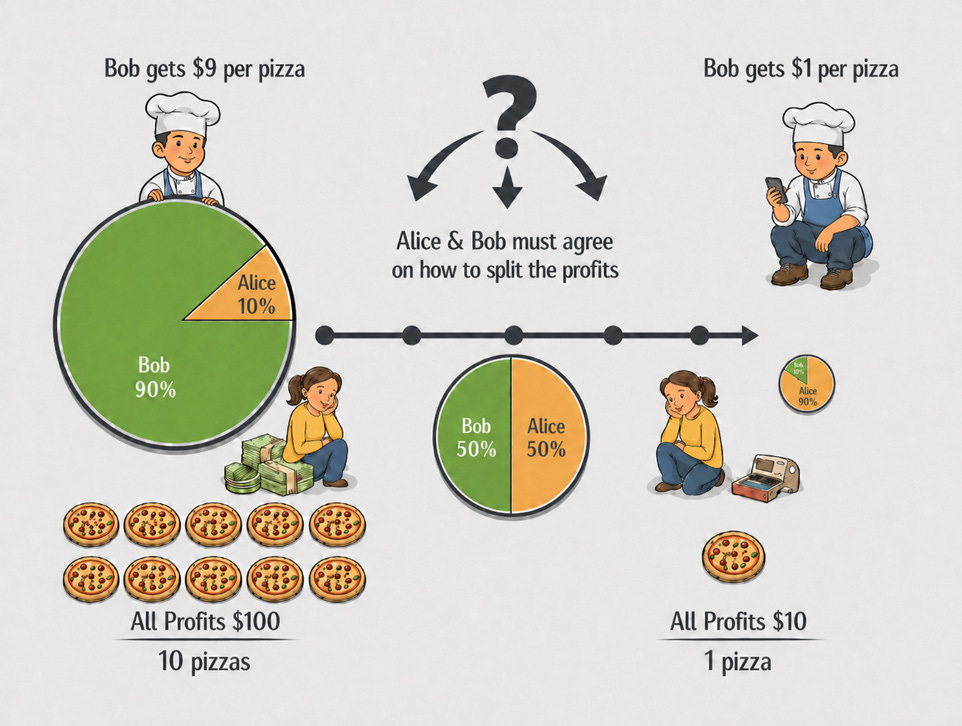
This case implies a classic trade-off: sometimes making the pie as large as possible does not imply making the split of the pie equal. Arguments in favour of billionaires often rely on the idea that people like Musk, Zuckerberg, and Bezos got very rich because they created a high level of wealth and quality of life for other people in society. This argument suggests that the pie in our current society might be unevenly split, but that it is much larger than in a system where Musk, Zuckerberg and Bezos would have had no prospect of getting rich and therefore not had the same motivation to engage in their ventures.
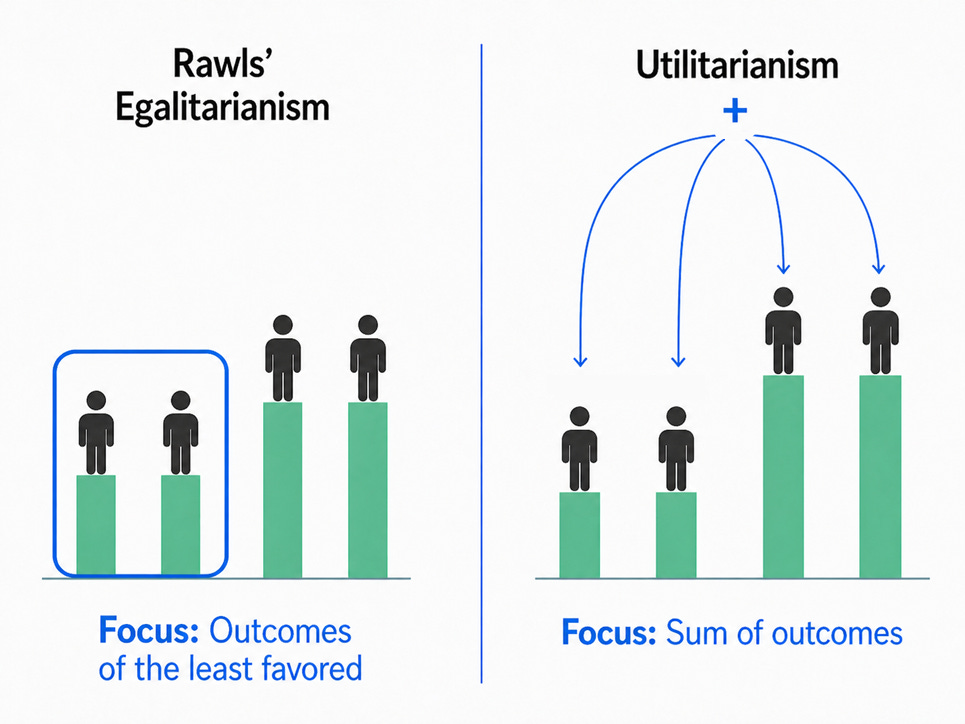
How should we choose between social contracts that might both influence the total size of the pie and how the pie is split? Political philosophy proposes two different answers. Utilitarians like Bentham and Mill argued that we should aim for the pie that is as large as possible.
Utilitarianism might lead to some conclusions most people find unappealing. For instance, should we be willing to sacrifice some individuals for the benefit of a larger number? What if Alice gets barely anything? Is it OK simply because the pie, mostly enjoyed by Bob, is the greatest?
John Rawls wrote his classic book A Theory of Justice partly as a rebuttal to utilitarianism.2 He famously argued that we should judge whether a society is fair by putting ourselves behind a veil of ignorance, as if we were outside society, ignoring which positions we have in society, such as gender, age, profession, talent, health, and wealth. In this position, we would be forced to imagine what it would be like to possibly be anybody in society.
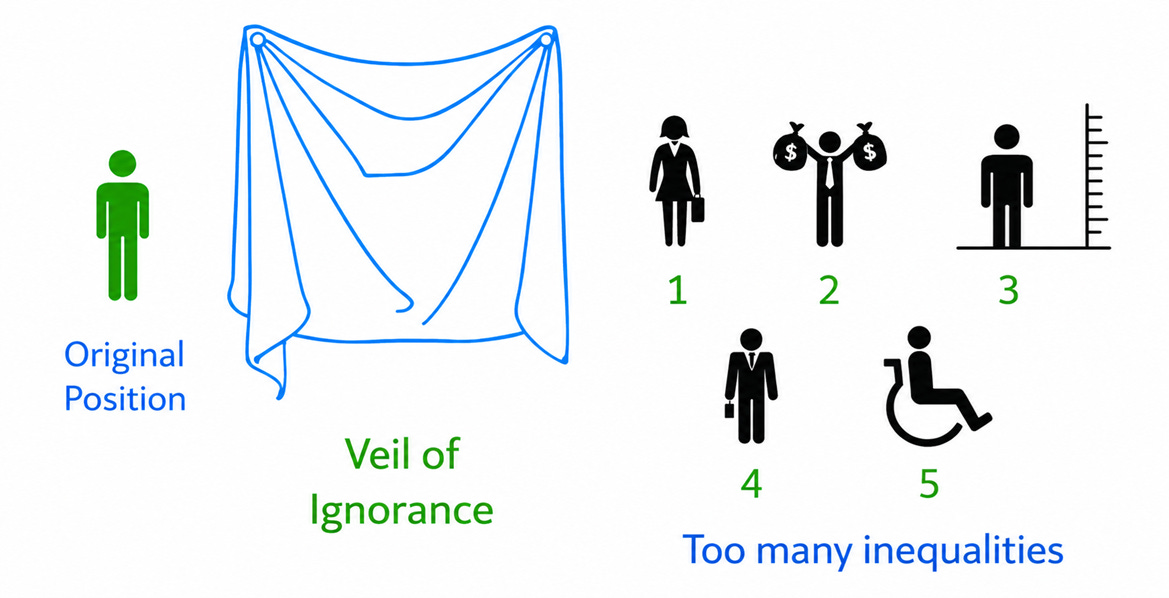
Rawls argues that, under the veil of ignorance, we would not simply choose the society with the largest pie. We would also care about how the pie is divided, because we might end up with the smallest slice. For this reason, he argues that a just society should maximise the position of those who receive the least. This is the difference principle.
If we were comparing different levels of wealth inequality, Rawls would tell us to choose the society that makes the poorest person as rich as possible. Rawls is egalitarian, and he argues that a just society would be organised to benefit its least well-off members.
It is important to stress that his view does not prohibit all inequality. It allows inequalities that improve the position of the worst-off, for example, if the prospect of becoming rich encourages entrepreneurship and innovation that also raise living standards at the bottom.3
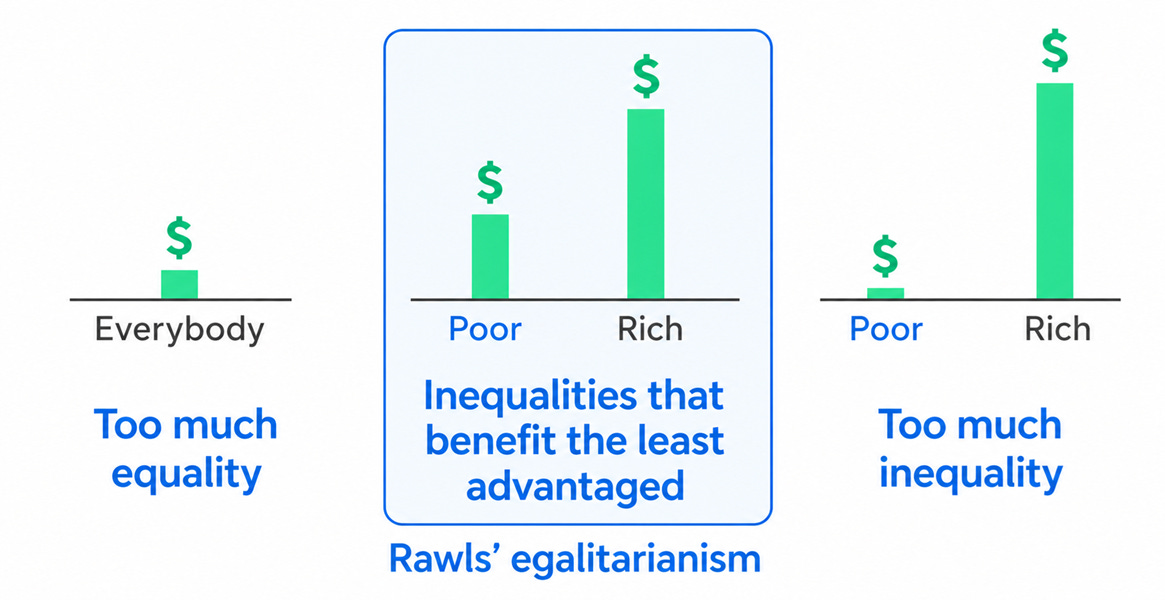
Economists have criticised this conclusion because it is equivalent to having an extreme degree of risk aversion under the veil of ignorance.4 Imagine comparing two societies with identical political rights but different levels of inequality. In the first, everybody lives in mediocre conditions. In the second, 99.9 per cent of people live extremely well, but 0.1 per cent are slightly worse off than in the first society.
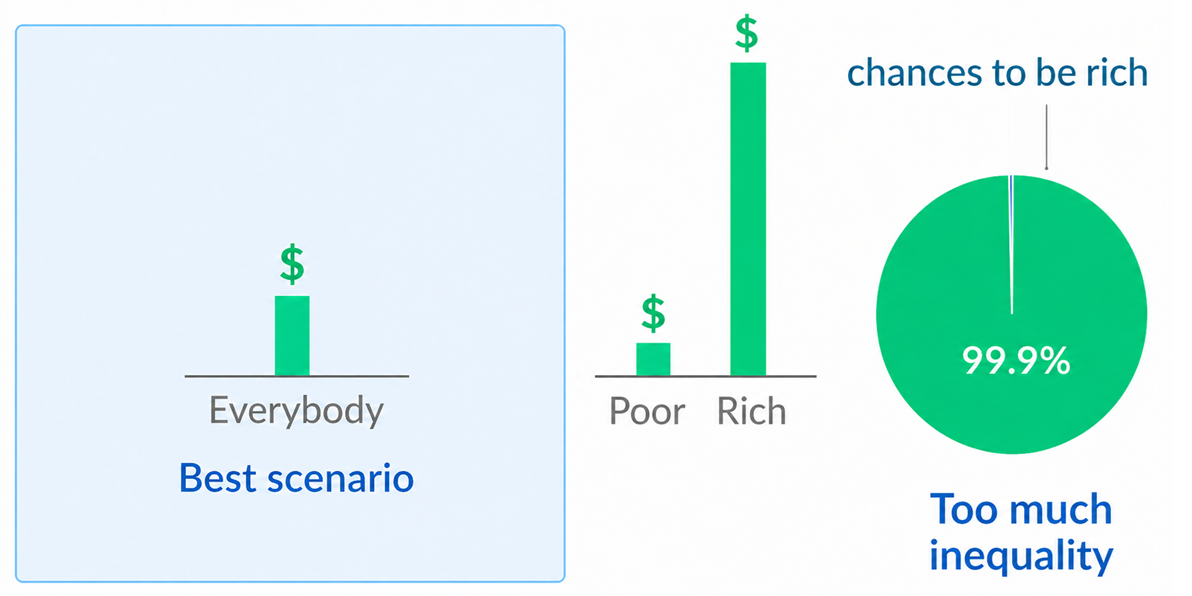
Because Rawls’ principle does not allow trade-offs against the position of the worst-off, it would rank the first society above the second, even though almost everyone is much better off in the second society and only a tiny minority is somewhat worse off. It is far from obvious that people would actually choose that way. Experimental studies in which participants are asked to reason behind a veil of ignorance find concern for the least well-off members of society, but not in the uncompromising form of the difference principle.5
Around the same time that Rawls was writing, the economist John Harsanyi independently developed a similar veil-of-ignorance argument. But Harsanyi applied standard decision theory: behind the veil, people should choose the society that gives them the highest expected payoff across the different social positions they might occupy.
In Harsanyi’s view, choosing between societies is like choosing between lottery tickets with equal chances of placing you in any social position. Rational people behind the veil would choose the lottery ticket with the highest expected payoff. In the example above, this approach would lead to choosing the second society, because the average satisfaction there is higher. That is the utilitarian solution.
So who is right, Harsanyi or Rawls? Should we be utilitarian or egalitarian? This is one of the central questions of modern political philosophy. As Marc Fleurbaey, Maurice Salles, and John Weymark put it:
The opposition between utilitarianism and liberal egalitarianism has triggered the most important developments in political philosophy in the twentieth century. — Fleurbaey, Salles and Weymark (2010)
Binmore’s answer: It depends on whether social contracts are binding
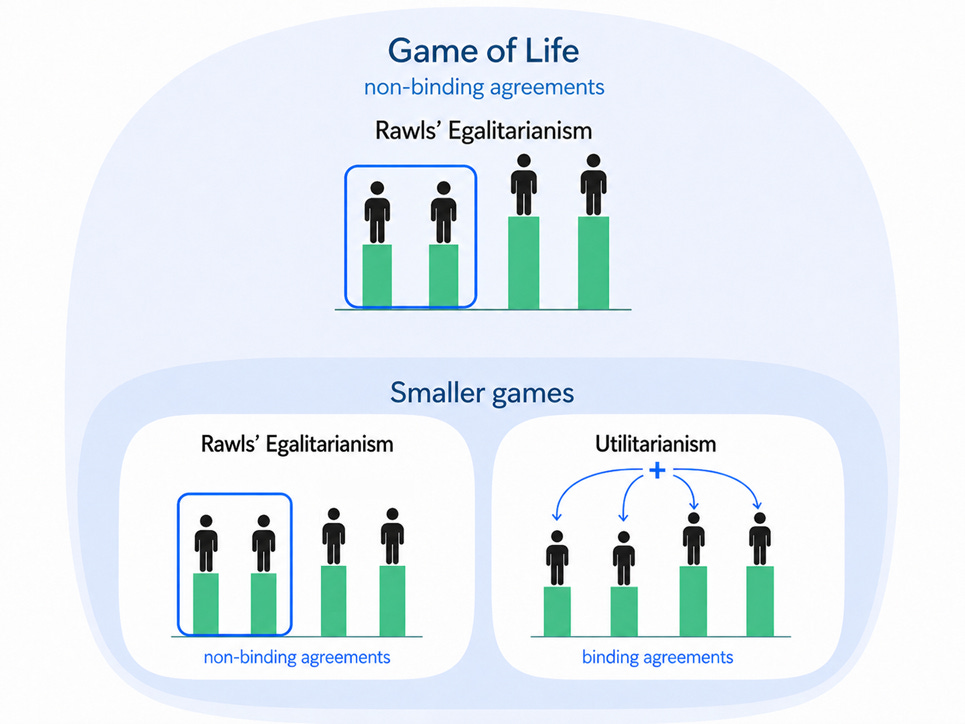
Binmore’s novel answer is that, at the level of society, social contracts must be self-enforcing. In the Game of Life, there is no external enforcer standing above society in the way that judges and police officers stand above ordinary contracts within it. If a dictator seized power and overturned existing political and civil rights, there would be no external authority able to simply restore the previous social contract.
When a contract is not binding, the only way for it to work is for everybody to be sufficiently happy with it, in the sense that they do not expect to do better by renegotiating or withdrawing from cooperation. The plebeians have to agree to work in Rome for the Roman social contract to actually function. If they can credibly do better by withdrawing from cooperation, the old contract cannot simply be imposed as if nothing had changed. When people have equal bargaining power, this pushes towards the egalitarian solution, because with this solution, those who are the worst off are already in the best situation possible.6
However, while the social contract itself cannot be binding and needs to be self-enforcing, smaller games can have binding agreements, even without external enforcers, if the structure of incentives makes deviations too costly. When people interact repeatedly, they can adopt rules of cooperation that are binding because deviating would lead to sanctions.7 It is therefore possible that, while at the level of the Game of Life the social contract is egalitarian, in smaller games, the social contracts can be utilitarian.
The implications of Binmore’s insight for modern political debates
Binmore is not shy about commenting on current political debates, but his theory is nonetheless primarily abstract and generic. Here, I leverage his general insights to look at how they can help us understand modern political debates. To be clear, these are my own interpretations.
When utilitarianism can prevail
Utilitarianism can prevail when a given decision, with its gains and losses, is part of a larger game where everybody can win overall. Each decision can then be made with a utilitarian outlook because the agreement in every single situation is bound by the larger cooperation, which benefits all, so nobody has an interest in withdrawing from the larger game.
Over the long run, utilitarianism is best understood as a mutual advantage bargain: it maximises the social gains in the short run as a way to benefit all in the long run.
Consider how we tend to judge whether a public policy is good or not. On this question, economists adopt by default a utilitarian approach.8 Where should the next school be built? The next airport? The next centre for drug addicts? In these kinds of decisions, the government assesses the social costs and benefits and often claims to choose the solutions with the greatest social benefits. This approach is utilitarian. In the distribution of resources and costs, the government tries to maximise the social utility coming from its decisions.9
The whole discipline of cost-benefit analysis is based on this idea. People who say that “you can’t put a price on life” are often unaware that this is what their government is doing on a daily basis. In public health, projects and policies are routinely evaluated for the number of lives per dollar they save. In England, the NHS explicitly uses the threshold of £25,000–£35,000 per year of life (in good health) saved as a way to decide whether a health investment is cost-effective or not. Similar thresholds are used in a more or less formal way in the USA (by the Institute for Clinical and Economic Review) and in Australia (by the Pharmaceutical Benefits Advisory Committee). The World Health Organisation itself has recommended in the past a threshold of one to three times GDP per capita per year of life saved.10 Such practices are meant to optimally allocate limited financial resources where their impact is going to be greatest in terms of lives saved, regardless of who will be saved.11
Why would people agree with such a utilitarian approach? The answer is that as long as citizens expect to face a large number of situations where they will sometimes be advantaged by a decision and sometimes disadvantaged, a utilitarian approach will, over time, be the most beneficial to all.
Many utilitarian thinkers make the mistake of thinking that this approach is good because it maximises something desirable like “years of life”.12 But that is misguided. Society is composed of individuals, and individuals care about their own lives, not about an abstract sum at the social level. In Binmore’s perspective, a utilitarian approach works as a socially accepted practice, not because the sum of benefits is a mystical “collective good” that has to be pursued for its own sake. It is because utilitarian rules can work as a mutual advantage arrangement: they maximise expected gains for all over time. If Alice and Bob do not know when and how public policy decisions might benefit them, they can support a utilitarian approach, since, in expectation, they will benefit most from it.
Because the social support for utilitarian approaches is based on long-term gains, it is contingent on the social expectations that people have similar chances to benefit or be harmed by the decisions made. If these expectations break down, the support for utilitarian approaches breaks down as well.
When utilitarianism will fail, and egalitarianism will be preferred
Utilitarian solutions will be rejected when the gains and losses in one situation are too lopsided. The expectations that the utilitarian solution will be beneficial in the long run will break down if it recommends losses so large for a group in one situation that it is unlikely this group will recover these losses in the long run.
If a factory closes because of a free trade agreement, its workers might never recover financially. Even if it benefits the country as a whole, they might resist the utilitarian justification. The workers losing their jobs will not care about being told that it is good for society because, behind the veil of ignorance, they could have been someone who benefits from the factory closure. They might therefore request special compensation to make the social contract acceptable.

Utilitarian solutions will be rejected when the same people tend to win or lose over time because of their individual characteristics. Any utilitarian argument will fail to be sustainable if it leads to an uneven distribution of costs and benefits between different people over time. Hence, differences in outcomes based on sex and ethnicity will often lead to egalitarian considerations. Alice will not care about the suggestion that a social inequality based on sex is fine because she could have been a man, and that inequality would have been chosen under the veil of ignorance. She is not a man and won’t be for the rest of her life. So whenever she has equal bargaining power, she will reject social contracts that give different outcomes to men and women “in the interest of society”.
Understanding the deep underlying logic of political debates
Binmore’s simple social setting—two groups who have complete information about each other and the implications of different social contracts—allows him to leverage the formal tools of game theory to identify the crux of fairness discussions as being about bargaining to select one social contract. He acknowledges that his simplifications would need to be relaxed in later work.13 Let’s do this and look at the deep logic behind political debates in societies.
Allowing for coalitions in society: Democratic institutions as a mutual advantage bargain
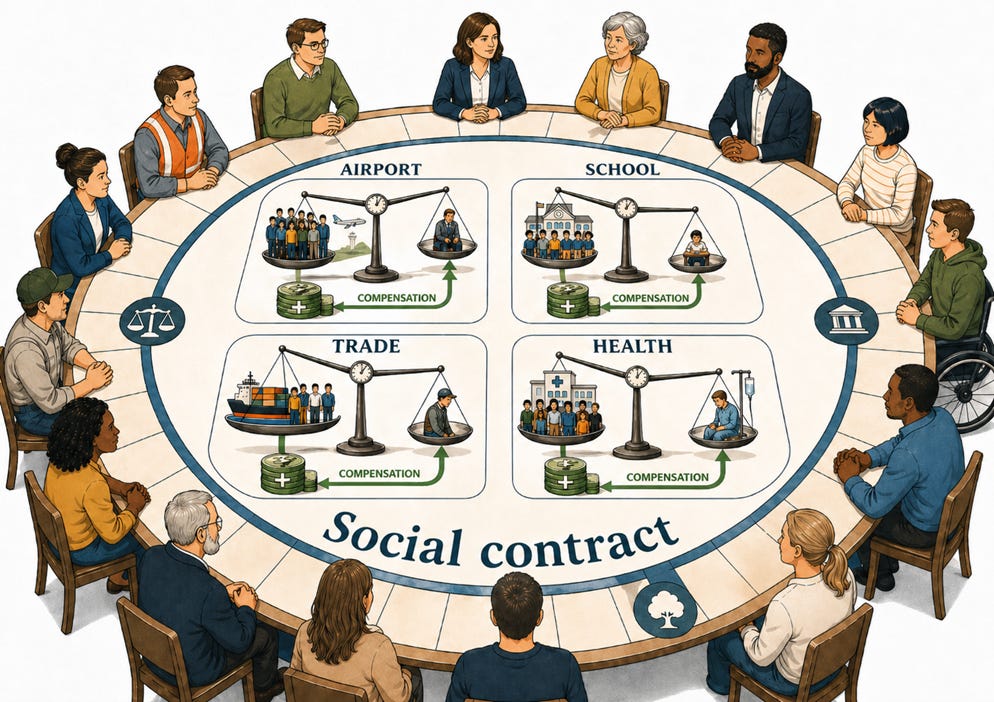
In a large society with many citizens, social groups try to improve the social contract in their favour by forming coalitions. In their study of coalitional games, game theorists found an unexpected result: we might actually expect coalitions to be unstable because a winning coalition can always be undone by competing coalitions peeling away some of its key members with better deals.
This result, which makes it hard to predict how coalitions will form in society, might be the necessary substrate upon which democratic institutions rest. At the heart of democracy and its voting rules, there is also a mutual advantage logic over the long run. Why would those in the minority accept the decision of the majority? Because tomorrow they might be themselves in the majority.
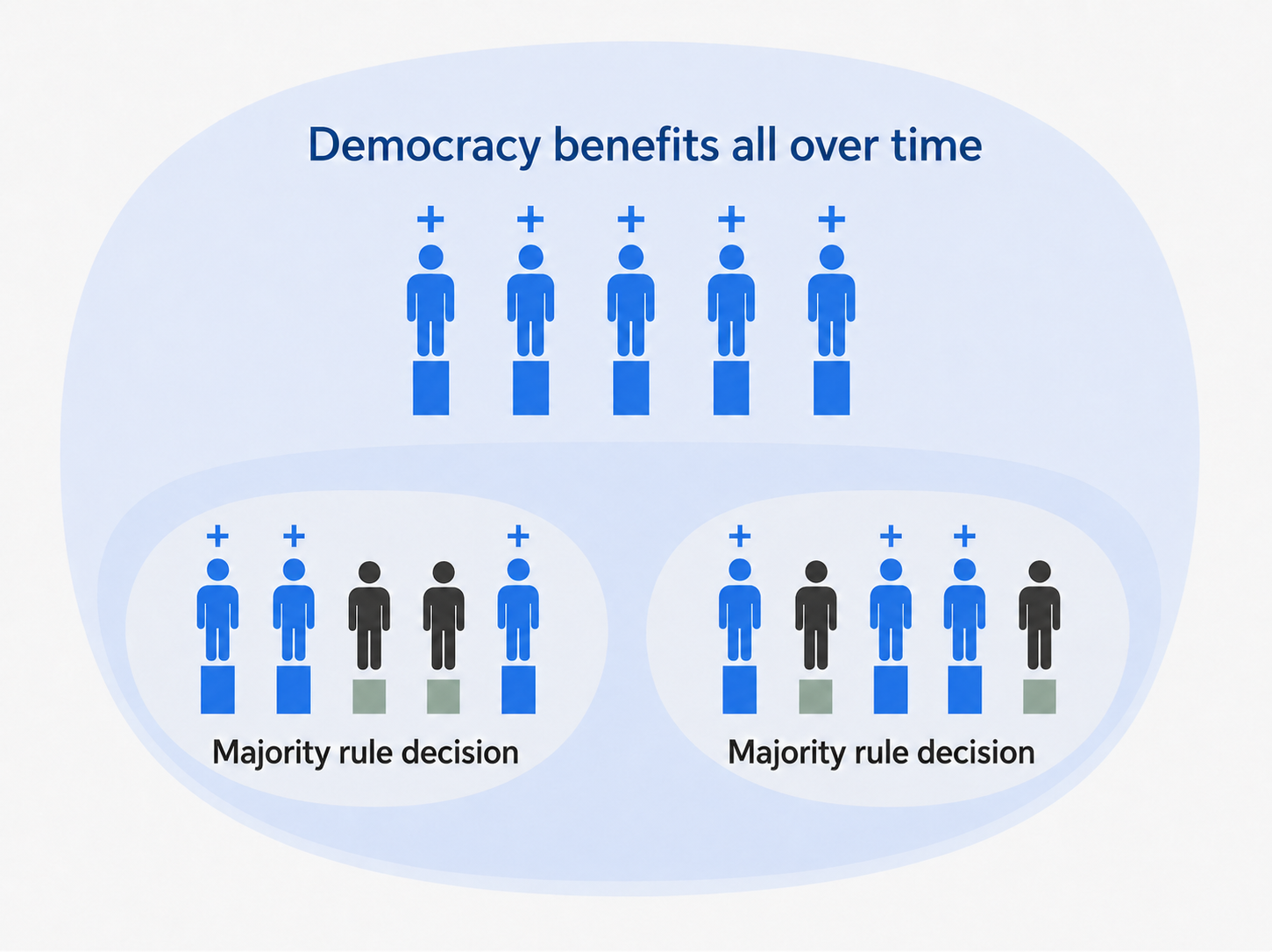
The use of majority voting has a utilitarian aspect in the sense that it gives priority to the option preferred by more people.14 A mutual advantage logic provides a justification for the use of this approach to make collective decisions. If you believe that you have the same chance as other people of ending up in the majority and having your way in each election, it makes sense to be for majority decisions because you’ll get your preferred options more often (since more than 50% of the people are in the majority each time).15
This point was made by political scientist Adam Przeworski in his book Democracy and the Market:
Political forces comply with present defeats because they believe that the institutional framework [...] will permit them to advance their interests in the future. — Przeworski (1991)
This belief, that the tables will turn, is actually reasonable given the instability of coalitions. Political scientist William Riker emphasised this game-theoretic insight, arguing that one key aspect of democratic regimes is that they prevent any single majority from holding power indefinitely:
Liberal democracy almost guarantees some circulation of leadership so that great power is usually fleeting and no vested interest lasts forever. - Riker (1982)
A direct consequence of this explanation of the support for democratic institutions is that this support is bound to be linked to the trust that people have that they might benefit from the democratic procedures they are asked to abide by when they lose.
This explains why and when democratic institutions will work more smoothly and when, on the contrary, procedures like majority rule will face resistance. Political scientist Robert Dahl said about it.
The stronger the expectations among the members of a political minority that they will enter into tomorrow's majority, the more acceptable majority rule will be to them, the less they will feel a need for such special guarantees as a minority veto, and the more likely they are to see these as impediments to their own future prospects as participants in a majority government. - Dahl (1989)
It is therefore normal that democratic institutions come with protections for the political minority: those in the minority need to be guaranteed that the current majority will not change the rules of the game to prevent members of the minority from winning in the future.
This perspective helps explain why social divisions can weaken democratic culture. When society is fragmented into rigid coalitions, the mutual advantage logic at the heart of democratic institutions is threatened. Minority groups may doubt that state institutions will work for them when these institutions are controlled by the majority.16 Societies that are ethnically and culturally fragmented tend to have weaker state structures and less willingness to empower central institutions.17 The same logic applies to political polarisation: when each side sees the other as a threat that must be kept from power, democratic norms become more fragile. This concern is central to recent debates about the United States, where political scientists have argued that polarisation can make citizens more willing to excuse violations of democratic norms by leaders from their own side.18
Allowing incomplete information: political debates blend fairness and factual arguments
If society’s members had full information about the facts, there would not be any point in arguing about them. A direct consequence of the fact that information is not complete is that political debates articulate discussions about fairness around debates about facts:19
We move from a bargaining situation where all the information is clear, and people only have to agree on a social contract, to a situation where there are uncertainties about the possible consequences of social contracts. To get their preferred social contract, people can then both argue that they deserve it based on a shared understanding of the facts or argue for an understanding of the facts that is favourable to their claims about justice. This is why a lot of the political arguments are about disagreements about the effect of policies. Right-wing politicians might argue that wealth trickles down, while left-wing politicians argue that it is all just a trick.
The bargaining perspective helps us see that there are two things going on at the same time in such debates. Because policies based on an utterly wrong understanding of the world would be harmful, people have some interest in these debates delivering conclusions that are closer to the truth than to falsehood.
But some factual conclusions might be better for some and worse for others. High-income earners may prefer the conclusion that taxes hurt the economy. Trade unions might prefer the conclusion that higher minimum wages are good for growth. Each side has an incentive to back and to believe the “truth” that is most convenient to them. Political debates take the form of courtroom debates: the apportionment of credit and blame is articulated on disputes about the facts.
This view provides a simple explanation of what political ideologies are: competing visions for how to adapt the social contract. They articulate normative principles (what is fair) with factual claims (what works) to support a vision about how society should be organised.20 Once we understand that bargaining about the social contract is what’s behind political debates’ ideas and factual claims, the nature of these debates and, in particular, the singular difficulty of agreeing on facts, becomes easy to understand. It is not a bug, it is a feature.

Intellectual and political discussions about what a just society is are complex. Libraries could be filled with philosophical discussions on what a just society is. Binmore’s approach implies that the question about justice in society is, in a sense, much simpler to understand than lots of the philosophical debates might suggest.
There is no absolute principle of justice to be found as if it were written in the fabric of the universe. All the questions about justice in society arise from the bargaining between the different social groups on how to organise society.
In that perspective, beyond the noise and clamour of daily political debates where politicians argue with ideas and facts to gain support for their coalition, there is a fundamental question about the allocation of duties and rewards in society: who should get what? In a society with fairly equal bargaining power, one can expect Rawlsian considerations for the least well-off to be present. The plebeians could always secede, and society could not work without them.21
The picture I have presented here leaves an important question unanswered: what happens when bargaining power is not equally distributed? Binmore provides one of the most interesting and thought-provoking answers, which I will discuss in my next post.
References
Acemoglu, D. and Robinson, J.A. (2000) ‘Why did the West extend the franchise? Democracy, inequality, and growth in historical perspective’, Quarterly Journal of Economics, 115(4), pp. 1167–1199.
Aidt, T.S. and Jensen, P.S. (2014) ‘Workers of the world, unite! Franchise extensions and the threat of revolution in Europe, 1820–1938’, European Economic Review, 72, pp. 52–75.
Alesina, A., Baqir, R. and Easterly, W. (1999) ‘Public goods and ethnic divisions’, Quarterly Journal of Economics, 114(4), pp. 1243–1284.
Bentham, J. (1843) ‘Anarchical fallacies’. In: Bowring, J. (ed.) The Works of Jeremy Bentham. Vol. 2. Edinburgh: William Tait.
Binmore, K. (1994) Game Theory and the Social Contract, Volume 1: Playing Fair. Cambridge, MA: MIT Press.
Binmore, K. (1998) Game Theory and the Social Contract, Volume 2: Just Playing. Cambridge, MA: MIT Press.
Binmore, K. (2005) Natural Justice. New York: Oxford University Press.
British Medical Association (BMA) (2020) COVID-19 – ethical issues: A guidance note. London: British Medical Association.
Dahl, R.A. (1989) Democracy and Its Critics. New Haven: Yale University Press.
Dionysius of Halicarnassus (1940) Roman Antiquities. Volume III: Books 5–6.48. Translated by E. Cary. Loeb Classical Library 357. Cambridge, MA: Harvard University Press.
Gaertner, W. and Schokkaert, E. (2012) Empirical Social Choice: Questionnaire-Experimental Studies on Distributive Justice. Cambridge: Cambridge University Press.
Genicot, G. and Ray, D. (2003) ‘Group formation in risk-sharing arrangements’, Review of Economic Studies, 70(1), pp. 87–113.
Goldburg, C.B. (1994) ‘The accuracy of game theory predictions for political behaviour: Cumulative voting in Illinois revisited’, Journal of Politics, 56(3), pp. 885–900.
Harsanyi, J.C. (1953) ‘Cardinal utility in welfare economics and in the theory of risk-taking’, Journal of Political Economy, 61(5), pp. 434–435.
Harsanyi, J.C. (1955) ‘Cardinal welfare, individualistic ethics, and interpersonal comparisons of utility’, Journal of Political Economy, 63(4), pp. 309–321.
Harsanyi, J.C. (1975) ‘Can the maximin principle serve as a basis for morality? A critique of John Rawls’s theory’, American Political Science Review, 69(2), pp. 594–606.
Hoppe, H.-H. (2001) Democracy: The God That Failed: The Economics and Politics of Monarchy, Democracy, and Natural Order. New Brunswick, NJ: Transaction Publishers.
Khatib, L. and Gardiner, S. (2015) Lebanon Situation Report. Beirut: Carnegie Middle East Center.
Lalley, S.P. and Weyl, E.G. (2018) ‘Quadratic voting: How mechanism design can radicalize democracy’, AEA Papers and Proceedings, 108, pp. 33–37.
Przeworski, A. (1991) Democracy and the Market: Political and Economic Reforms in Eastern Europe and Latin America. Cambridge: Cambridge University Press.
Riker, W.H. (1982) Liberalism Against Populism: A Confrontation Between the Theory of Democracy and the Theory of Social Choice. San Francisco: W.H. Freeman.
Schildberg-Hörisch, H., 2010. Is the veil of ignorance only a concept about risk? An experiment. Journal of Public Economics, 94(11-12), pp.1062-1066.
Svolik, M.W. (2019) ‘Polarization versus democracy’, Journal of Democracy, 30(3), pp. 20–32.
Vergano, M., Bertolini, G., Giannini, A., Gristina, G.R., Livigni, S., Mistraletti, G., Petrini, F. and Riccioni, L. (2020) ‘SIAARTI recommendations for the allocation of intensive care treatments in exceptional, resource-limited circumstances’, Minerva Anestesiologica, 86(5), pp. 469–472.
I already discussed Rawls’ theory in the previous post about fairness judgement in everyday life. Here I extend the discussion to social contracts at the level of society.
The idea here is that inequalities might arise from incentives to work and innovate. If the work and innovation produced makes the poorest people better off, then some inequality can be acceptable.
Philosophers might retort that Rawls does not justify his defence of the principle of difference with a stance on what risk aversion should be under the veil. Instead, he gives reasons that look somewhat moral.
In fact, this is the key part of his book on which all his theory is based, and his argument for the principle of difference is surprisingly weak. He does not give a convincing “proof”, but a set of different and unrelated reasons. First, probabilities are not securely available under the veil; second, the parties care chiefly about securing an acceptable minimum rather than gambling for higher gains; third, they want to avoid outcomes that could be intolerable if they turn out badly placed; and fourth, the parties must be able to endorse the agreement later in good faith. In spite of these justifications, it is a fact that his solution is akin to having people be infinitely risk-averse under the veil.
See Schildberg-Hörisch (2010) and Gaertner and Schokkaert (2012).
The situation when bargaining power is equal among members of society is the easiest to discuss. We can arguably say that it provides a useful benchmark for liberal democracies that provide equal political rights to their citizens.
Consider, for instance, a mutual insurance agreement: people agree to help each other in case of need. People may have an interest in abiding by this agreement and helping others when they face hardship because not doing so would lead others to exclude them from the insurance agreement in the future.
This approach is codified with the Kaldor-Hicks principle, which says that a policy would be good if everybody could gain after some hypothetical transfers. Since the transfers do not need to be made, this principle only leads to maximising the sum of gains, even if these gains are in practice unevenly distributed.
Economists may seem to be inconsistent here as they often argue that one cannot compare the gains and losses in utility between individuals. A full utilitarian approach aiming to maximise the sum of utilities is therefore rejected. But economists de facto reintroduce it with the use of one principle, the Hicks-Kaldor criterion, which states that a policy is good if it makes some people better off and if the gains are large enough that those who lose out could potentially be compensated. These compensations do not need to be made to justify the policy, so in practice applying this criterion is indistinguishable from utilitarianism.
Years of life are measured “in good health” using either the notion of QALY (quality-adjusted life year) or DALY (disability-adjusted life year).
During the COVID pandemic, utilitarian principles were explicitly stated by medical associations. Given the limited resources, in particular ventilators, the British Medical Association wrote:
In dangerous pandemics the ethical balance of all doctors and health care workers must shift towards the utilitarian objective of equitable concern for all — while maintaining respect for all as ‘ends in themselves’. — BMA (2020)
And the Italian Society of Anaesthesia, Analgesia, Resuscitation and Intensive Care explicitly stated that this means making some choices or allocating resources toward those who are more likely to survive and live longer lives.
The underlying principle would be to save limited resources which may become extremely scarce for those who have a much greater probability of survival and life expectancy, in order to maximize the benefits for the largest number of people. — Vergano et al. (2020)
Binmore calls this defence of utilitarianism “teleological”: there is one fundamental goal that is good a priori, maximising the sum of individual outcomes.
The reason Binmore did not do these extensions himself is twofold. First, in regard to coalitions, the problem of coalition formation is, in a sense, unresolved in game theory. Game theorists do not have, to the extent they have in other domains, a satisfying conceptual solution to predict when and how coalitions form.
There has been notable progress since Binmore’s publication, but at the same time, coalitional game theory has fallen to a large extent as a topic of interest for economists (most likely because clear solutions to make predictions were elusive). As a consequence, I think that Binmore’s reservations are still valid.
In conclusion to his two volumes, he writes:
[G]ame theorists have proposed many models that are intended to explain coalition formation among rational players, but none can be said to have succeeded in capturing everything that matters. Until further advances have been made on this front, I therefore thought it wise to study only the case in which current theory is adequate—that of a [two-player society which] can usefully be seen as representatives of monolithic blocs.
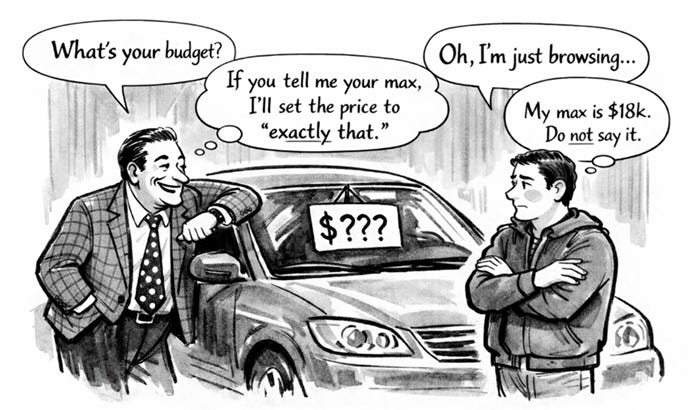
Second, in regard to incomplete information, game theorists have models to study such situations, but they are much more complex than the case of complete information. One key limitation in such situations is that people do not have an interest in revealing their private information; instead, they may gain by getting others to form wrong beliefs about their private information. Anybody who has gone to a car dealership to try to get the best deal possible will appreciate this fact.
Binmore notes, however, that game theorists are not helpless. We can use game theory’s insights to design institutions that are more likely to be conducive to the correct information being revealed. Economists call this field of research mechanism design.
Technical note: It is not fully utilitarian because it does not weigh people’s votes by how happy or unhappy they would be with each solution. It counts how many people prefer each option, but not how intensely they prefer it. Since people’s inner preferences are unobservable, any system that aims to take the strength of preferences into account needs some way to induce people to report their preferences honestly.
Some alternative voting systems try to address this problem.
Cumulative voting, used in some corporate board elections, allows voters to allocate a budget of votes to one candidate or to spread them across different candidates. Concentrating votes on one candidate can indicate a stronger preference for that candidate. But this approach does not ensure that voters allocate votes as a sincere reflection of their preferences rather than for strategic reasons (Goldburg, 1994).
Quadratic voting is another proposed solution: people “pay” for votes, with each additional vote costing more and more (Lalley and Weyl, 2018). In theory, this can induce people to reveal the intensity of their preferences. But its desirable incentive properties rely on strong assumptions, such as voters understanding their probability of being pivotal and having private preferences that are independent of each other.
In practice, almost all voting procedures use a one-person-one-vote approach. This may be the safest approach when voters’ preferences are unobservable. It is easy to understand and implement, and it can produce mutual gains when people do not expect to be systematically stuck in the minority.
Consider the case in which winning coalitions are formed each time by picking members entirely randomly. You are more likely to be in the majority than in the minority in each vote, and so opting for majority rule will, in the long term, ensure that you have your way more often than not.
See Genicot and Ray (2003) for a formal treatment of this idea in coalitional game theory.
See Alesina et al. (1999).
See Svolik (2019) on the trade-off between democratic principles and partisan interests under polarisation.
For a concrete example, Kylie Ward, CEO of the Australian College of Nursing, declared in 2020, during the COVID pandemic:
It should never be preyed upon, the goodwill of women, and people, to keep this abusive cycle of not paying them their worth. […]
If we don’t get this right now, in 2020, where the world has just seen a difference that a profession like nursing makes, then I don’t know that we’re ever going to get it. — Ward Interview
This quote clearly articulates two types of arguments. The first sentence is about the pay of nurses not being fair, as it does not reflect their social worth. The second sentence articulates that claim through a factual statement: nurses are making a big difference in practice during the pandemic.
This perspective also explains why ideologies fit social group interests, while also being able to change the world. They fit social groups’ interests because coalitions adopt ideologies that are convenient for them. But they can influence the world, because they point to specific social contracts and coherent and compelling ideologies might be more convincing and therefore more likely to be adopted by a coalition and implemented.
In addition, it explains the semantic drift of ideological labels. The term “liberal” has evolved to mean radically different positions in different countries: left-leaning and pro-government in the USA, right-leaning and pro-market in Europe. Similarly, the term “socialist” has moved from meaning supporting revolution and the suppression of capitalism to supporting a welfare state within capitalist societies. The reason for this drift is that coalitions evolve and their interests change. The ideological package of a coalition is constrained by the pragmatic necessity to keep the coalition united and possibly growing. Coalitions’ ideological stances therefore tend to drift with their composition over time, and it is often politically more expedient to reinterpret the meaning of ideological labels than to drop them altogether.
Bargaining power was clearly unequal in ancient Rome. In modern liberal democracies, bargaining power is certainly not equal either, but universal suffrage gives low-income members of society a major source of political power. Through voting, they can influence how society is organised and how its surplus is distributed.
Some libertarians like Hans-Hermann Hoppe (2001) have regretted this fact, arguing that democracy allows poorer voters to raise taxes on richer citizens. But what this objection misses is that poor citizens have the vote for a reason. A social contract in which poorer members of society are enfranchised reflects the bargaining power they have outside formal institutions. In the nineteenth and early twentieth centuries, elites often extended voting rights not out of generosity, but because exclusion had become politically dangerous (Acemoglu and Robinson, 2000; Aidt and Jensen, 2014). Giving poorer citizens a voice within liberal institutions could be preferable to facing strikes, unrest, or revolution against liberal society itself.
I think that the crux of the issue is more whether people believe that we live in luck village or effort village. https://www.econlib.org/library/Columns/y2016/Klingcapitalism.html
The explanation of Binmoores egalitarianism sounds like he gives every disadvantaged subset, no matter how small, the ability to blow up the whole social contract. The workers losing from free trade *can* just reject this outcome... but clearly the criminals losing from going to prison *cant* just reject the outcome. Nor does this depend on how bad the outcome is - if theyre convicted to death, they still couldnt. Some form of power is active here, and not just the sort from threatening exit - its not clear those workers would gain anything from that.