I interrupt my discussion of how game theory helps us think about political and moral philosophy to turn back to a topic I have covered before: strategic interactions in international relations,1 with an until now unthinkable scenario of a US military seizure of Greenland.
Last November, I wrote that the possible election of Donald Trump was a risk for the quality of US democratic institutions. Unfortunately, it is now clear that the first year of this administration has far exceeded such negative expectations.
One aspect where the Trump administration has been especially destructive is the US-led rule-based international order. It is an order the US largely built after 1945, and one from which it has benefited disproportionately, through a dense web of rich allies that extend American geopolitical reach. Over the last year, the US administration has echoed Russia’s narrative about its war in Ukraine and pushed for a deal that would require Ukraine to give up parts of its territory, and it has treated Europe aggressively, from the imposition of tariffs to threats over Greenland.
In the last few days, Trump has again refused to rule out taking Greenland by force.2 In a recent CNN interview, White House Deputy Chief of Staff Stephen Miller defended this posture in blunt terms:
[W]e live in a world, in the real world that is governed by strength, that is governed by force, that is governed by power.
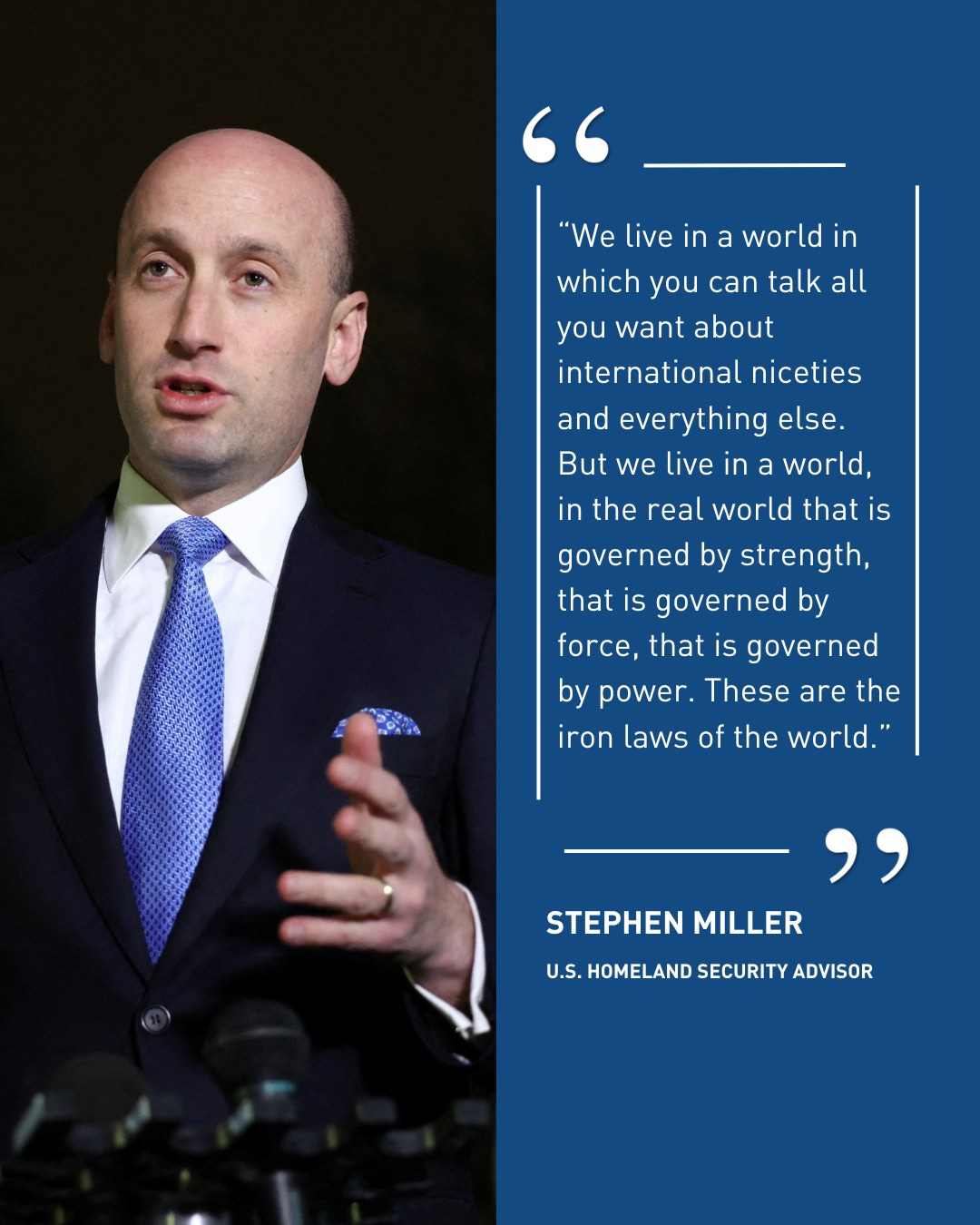
Miller is, like so many professed “international realists”, too smart by half.3 It is true that in international relations, there is no global government and no global police to enforce rules in the way domestic law is enforced. But those who conclude from this that the world is simply a Hobbesian free-for-all are misguided about the strategic nature of international relations.4
Even without an external enforcer, countries typically negotiate a modus vivendi: a set of conventions that stabilise expectations and make cooperation possible. They do not do this because they are idealists. They do it because cooperation is mutually beneficial when it is sustained over time. A forceful seizure of Greenland would not be “realism”. It would be short-sightedness: an action that gains little, and risks breaking the conventions that underpin America’s alliances and its long-run power.
Scenario for a takeover
Let’s consider what would happen in the case of an attempt at a military takeover of Greenland. Would it be politically possible for the administration to do so within US institutions? And, if it happened, what would the geopolitical costs be for the US?